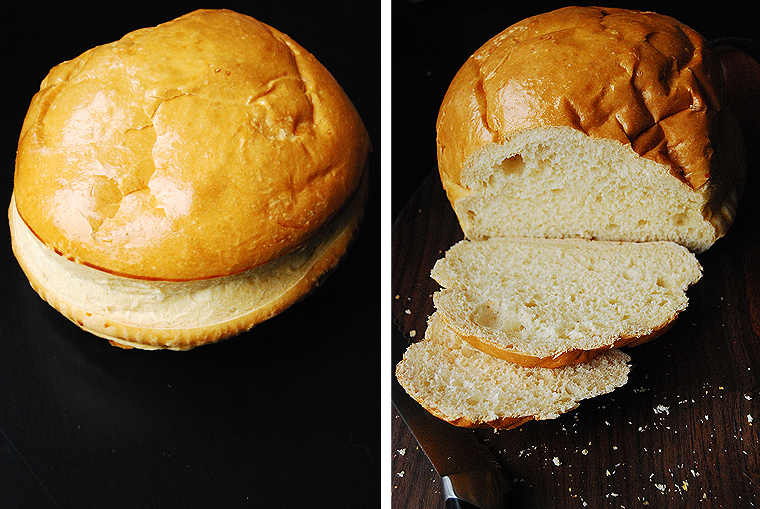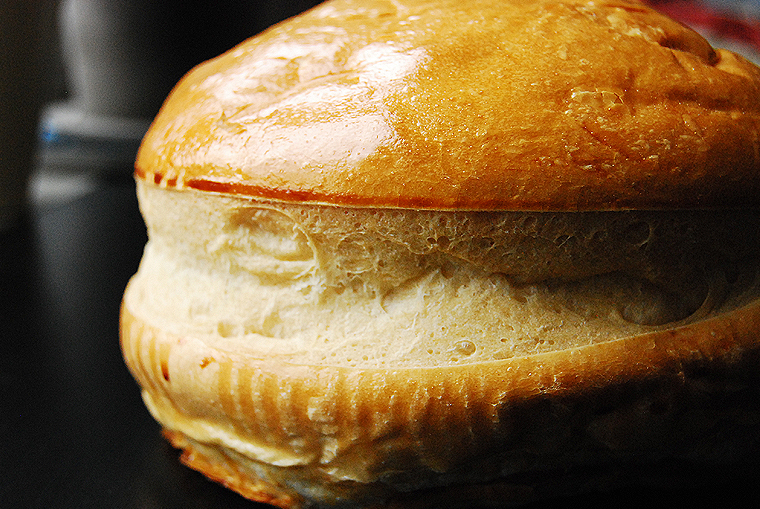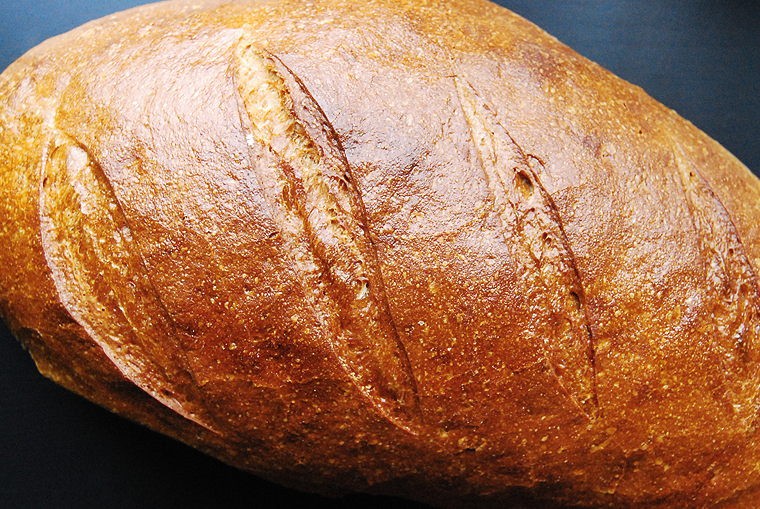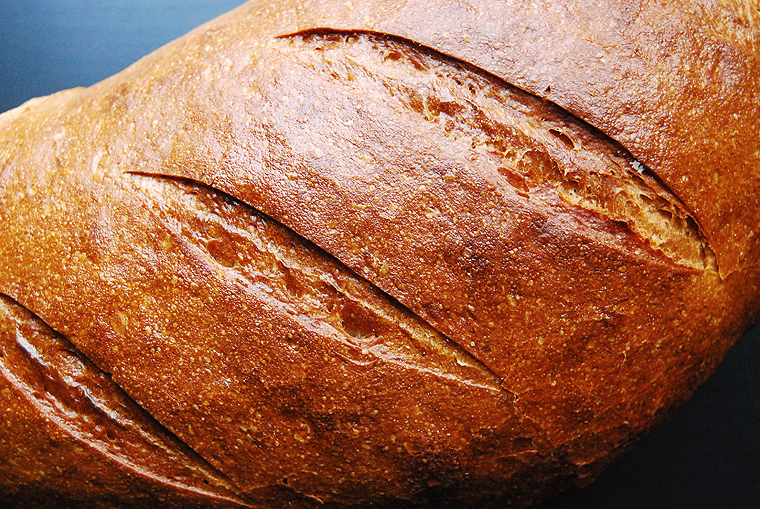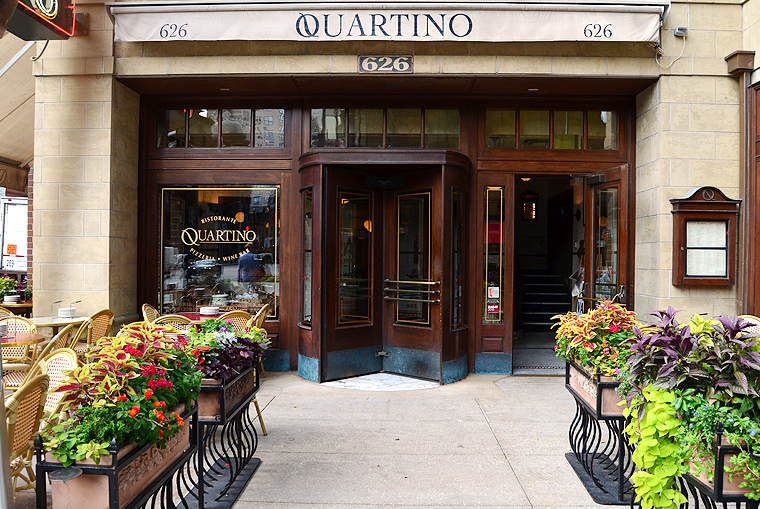
Quartino Ristorante and Wine Bar, Chicago

quartino_outside0

“Where the water costs more than the wine” – Quartino Restaurant

Italy can be hard to describe to those who have never been there. Beyond obvious things like ancient building facades and wonderful smells wafting out of kitchen windows and into the narrow cobblestone streets, there is a rhythm to life that takes a bit longer to notice. Although the markets open early, the locals leisurely enjoy espresso or cappuccino at coffee bars before choosing their vegetables, meats, and cheeses for the day. Daytime meals tend to be lighter, but late in the evening the restaurants start to fill up with diners, usually peaking after 9pm, for extended meals lasting 2-3 hours or more. Although the theme of the meal will vary by region, culture, and local ingredients; the main dish is invariably the conversation. That is to say, the Italians thrive on a steady diet of friendship, family, and romance, to be enjoyed over a table of culinary delights that dazzle with their simple elegance.

It has been said that French cuisine thrives on technique; that a talented chef is the most important ingredient in French food. In Italy, it is the ingredients that take center stage, and the truly masterful Italian chef does his best to present them in the most honest and harmonious way, letting the quality of the food shine through. What should be noted is that a massive amount of artistry and technique goes into preparing authentic Italian, and this is something that genuinely talented Italian chefs will downplay. To do it any other way would simply be wrong. This commitment to quality is an expression of the passion with which Italians approach most things in life. What Chef John Coletta has accomplished at Quartino is to capture the best of this Italian passion for dining, and present it in a way that lets the quality of his food speak for itself.
quartino_outside2

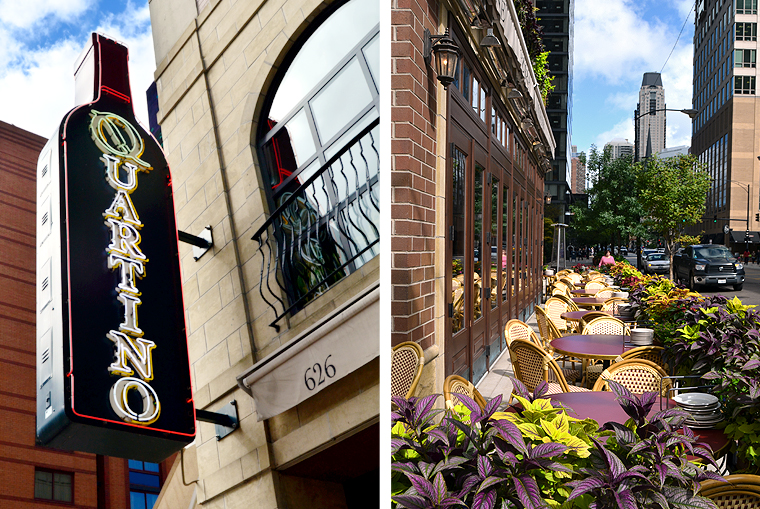
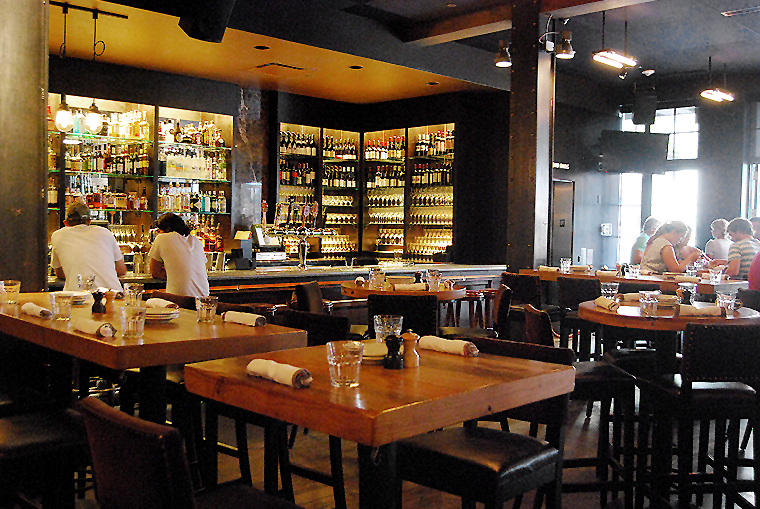
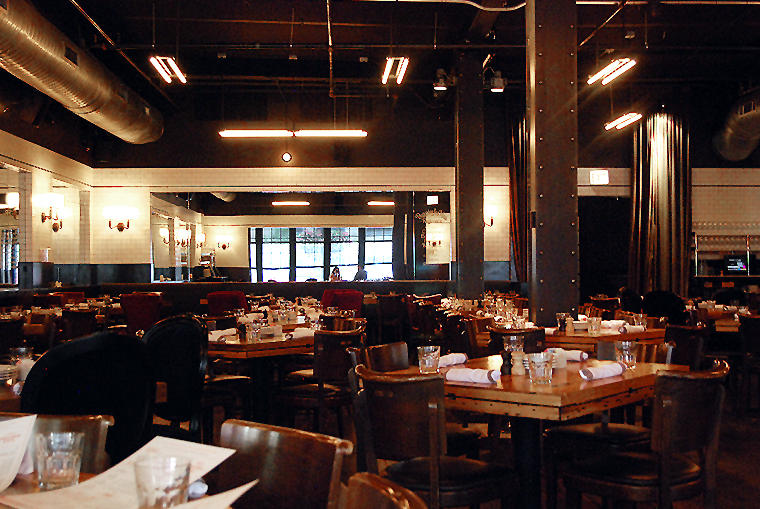
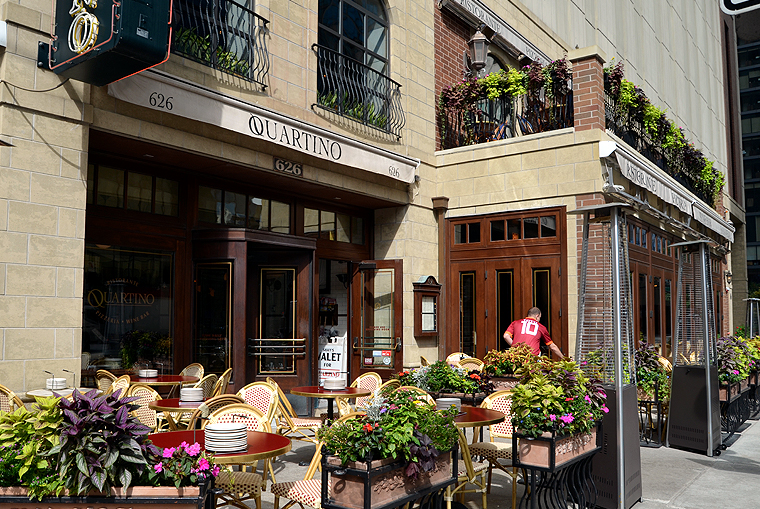
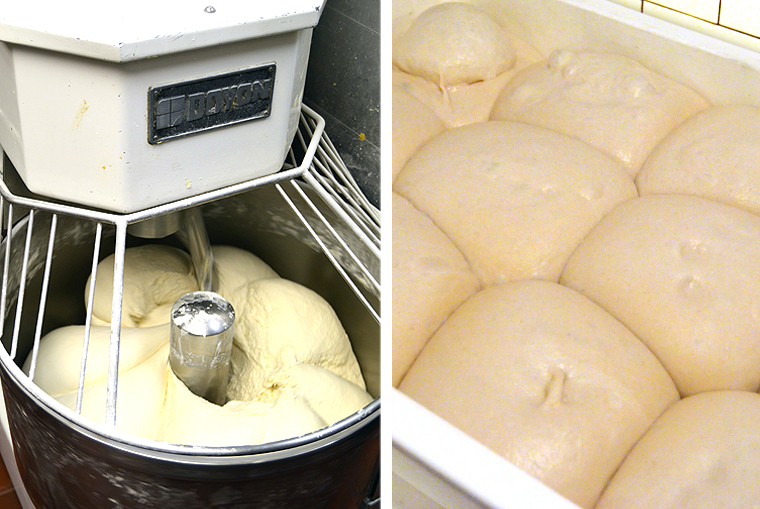
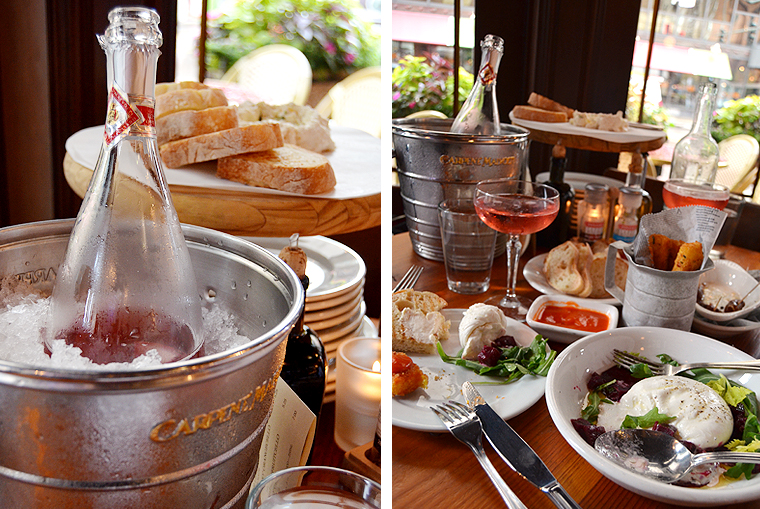
quartino_outside3With very little effort you can step off the bustling streets of downtown Chicago and enter a world of relaxed Italian dining at a level of quality almost indistinguishable from the great restaurants I’ve visited in Italy. The rustic wood touches, high pressed tin ceilings, white subway tiles, vintage mirrors, and the newspapers connected to a spreader/paddle hanging in the entryway take me back to Italy. The atmosphere is cozy and relaxed without feeling busy or cluttered.  This is a modern dining room in its operation, with a very easy style that I would describe as traditional street cafe with an upscale classical flair. Very tasteful and inviting, this is a very nice atmosphere to enjoy a meal.  The wait staff are very friendly and helpful, always attentive but not annoyingly so, and our server Kim was very knowledgeable about the menu and the ingredients, answering questions and helping arrange the crowded plates on our table. The artistry that goes on in the kitchen spills over into the dining room, where an array of artisanal Italian breads stand in a large working display, above a slicing machine where the baskets of table bread are freshly prepared as you are seated.quartino_interview1

quartino_kitchen4
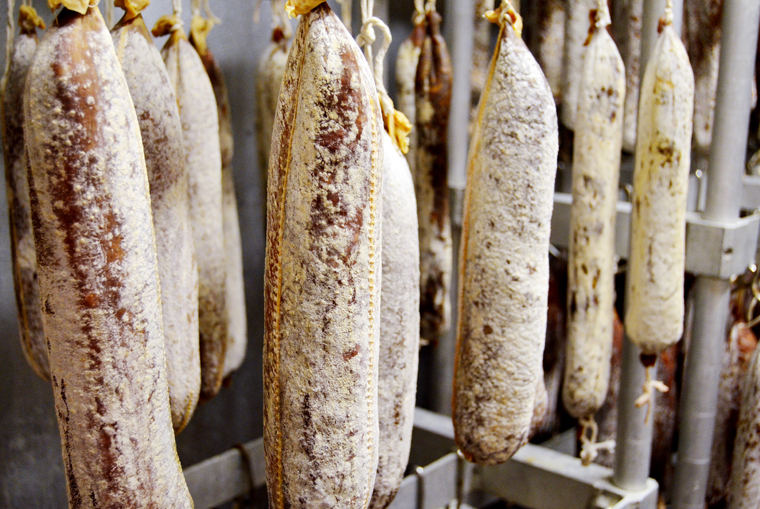
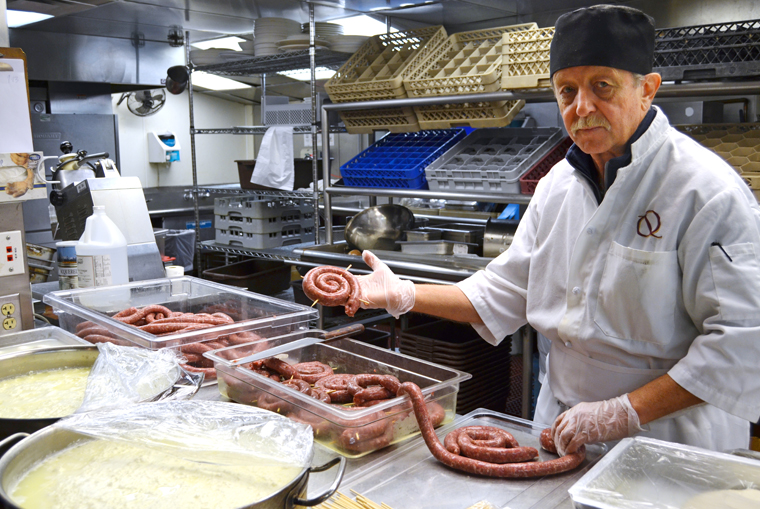
The main dining room features the salumeria (Italian for deli) with homemade salumi and prosciutti hanging overhead, where they serve up an array of imported Italian meats, cheeses, olives, roasted peppers, artichokes and giardiniera. The little which is not imported directly from Italy is prepared in-house according to Chef Coletta’s authentic recipes; some examples are the salamette (lightly spiced Italian salami), sopressata (spicy Calabrian sausage), and duck prosciutto (aromatic seasoned Moulard duck breast).  There are unobtrusive television screens playing something or other by Fellini, muted of course, as a pleasant diversion to diners.  As you sit down at your table you are presented with a menu, and notice the bottles of extra virgin olive oil and balsamic vinegar to accompany the basket of freshly sliced rustic Italian bread. As the dishes are designed for sharing, a stack of small plates stand at the ready for each successive course of your meal.
quartino_making_salumi

quartino_salumiThe menu at Quartino features authentic, traditional Italian dishes from various regions across Italia. On the menu you will find wine bar plates, soups/salads, fondue, handmade pastas, imported pastas, Piemontese risotto, seafood, house specialties, and even Napolitano pizza. If you’re in the mood for salumi and formaggi you are in luck. You will find a variety of olives, spuntini or snacks including roasted peppers, artichokes and Sicilian caponata. They have many imported authentic DOP cheeses such as Fontina Val D’Aosta, Parmigiano Reggiano, Academia Barilla Pecorino Dolce, and Asiago Vecchio to name only a few. There is a little something for everyone on this menu and you will also notice they have vegetarian options and many dishes can be prepared gluten-friendly on request.quartino_kitchen1
quartino_kitchen2
First dishes to arrive, the wine bar plates/salad:

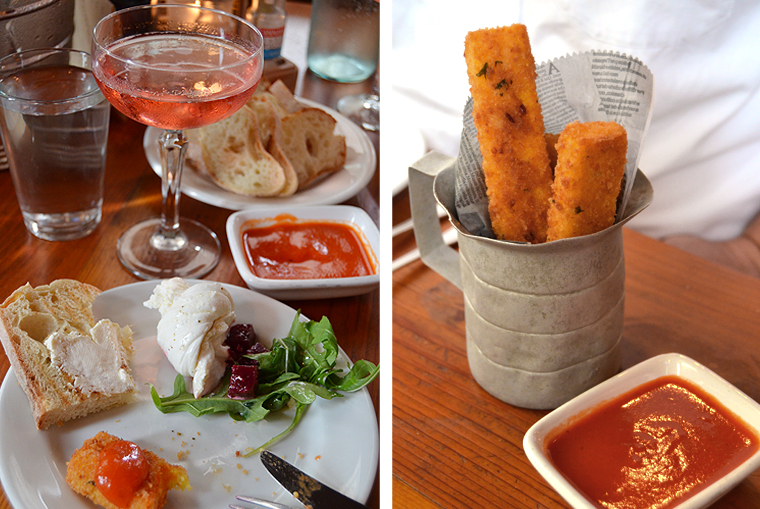
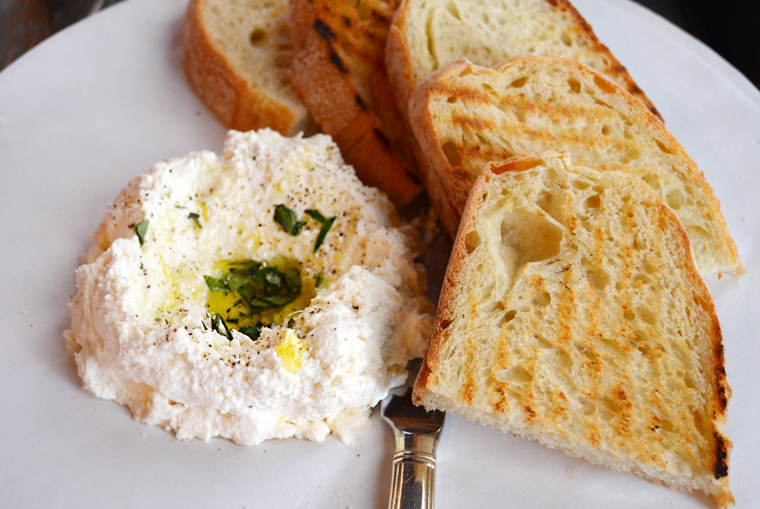
House Made Goats Milk Ricotta with Fresh Oregano & DOP Val Di Mazara Organic Extra Virgin Olive Oil: served with grilled Pugliese bread. The goats milk ricotta is light, creamy and richer than a cow’s milk ricotta. The Pugliese bread is rustic in texture, grilled nicely with the tender, chewy interior intact. Even if you are a little skeptical about goats milk cheeses or hate the pungent ‘goaty’ flavor of ripe goats milk cheeses, you won’t find a hint of that here, just a creamy richness unrivaled by cow’s milk, and it is fantastic atop the grilled bread. Served in a generous portion drizzled with olive oil, simple as it was, this is one of my favorite treats at Quartino.
quartino_ricotta
Dates Wrapped in Pancetta and filled with Gorgonzola Dolce and drizzled with Honey: The earthy sweetness of the dates are complemented by the crisp pancetta, as smoked bacon often overwhelms their delicate flavor in this popular dish. The sweet gorgonzola dolce enhances the earthy flavor of the dates in a way that is rich yet subtle; these are a great way to open your palate.

Polenta Fries with Red Bell Pepper Salsa: Thick cut and fried golden, these were crisp on the outside and tender on the inside. Not the least bit greasy, and the polenta interior retained its creamy texture, not the gummy texture of leftover polenta, and had a delicate malted flavor that added some complexity to the dish. The red bell pepper salsa smelled spicy but was subtle in its bite. The taste was familiar to me and reminded me a bit of a Mediterranean Ajvar, and complimented the polenta fries very nicely.quartino_starter1
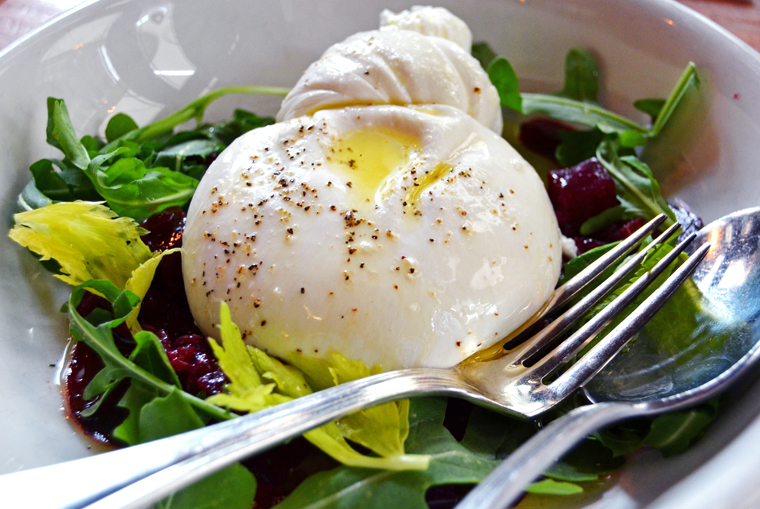
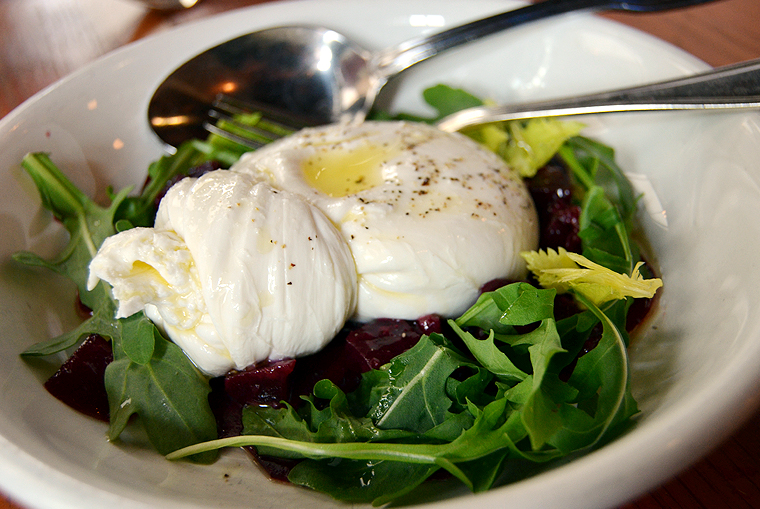
quartino_starter3House Made Burrata with Heirloom Roasted Beet Salad on top of Arugula: If any of you have not heard of or tried Burrata, this wonderfully creamy fresh mozzarella, you are missing out. Burrata is a fresh cheese, similar to mozzarella, but made in a way that creates a pouch of sorts of finished cheese, which is then filled with cream and tied closed. It has a much lighter texture than your average fresh mozzarella di Bufala, and much creamier taste. Delightful all by itself, but when you take a bite of the burrata, together with tender roast beets, thinly shaved pickled beets and peppery arugula all together, the combination of creamy, earthy, sweet, and tangy all together, this dish is transformed into something extraordinary.quartino_burrata
quartino_burrata
The pastas:

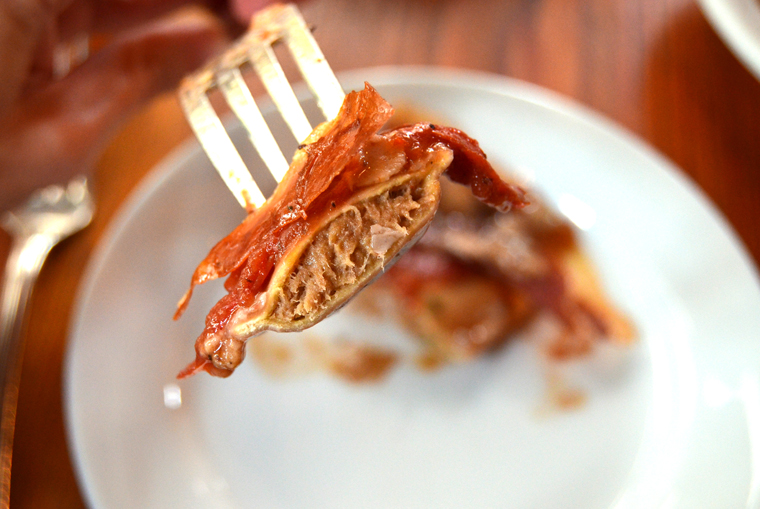
House Made Ravioli stuffed with Braised Pork, Speck, and Fava Beans: The braised, shredded pork filling was tender and perfectly seasoned. The texture is hard to describe, very finely shredded to a consistency that perfectly complements the tender pasta. They arrived in a shallow pool of pork broth made rich with red wine, and topped with crisp speck, or smoked prosciutto. The thin sauce was incredible, I would guess it had a deep, roasted pork flavor and I found myself sopping it up with bits of bread. The fava means were an amusing addition, tender but somehow meaty in the sauce, with slivers of mushroom and sweet roasted cherry tomatoes with a concentrated sweetness. A Wonderful dish and very satisfying.
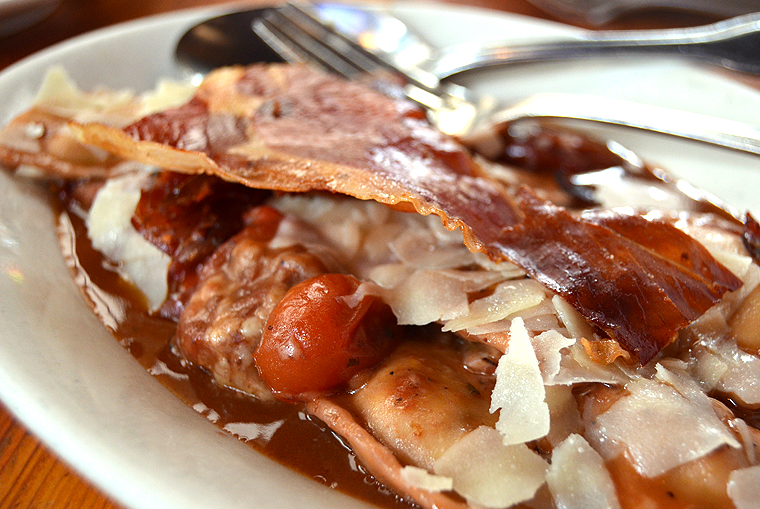
quartino_ravioli

quartino_ravioli
House Made Gnocchi with Fresh Green Beans and Arugula Pesto: The house made gnocchi was tender and light, without the gummy texture of the bad gnocchi that turns people off. My first few encounters with gnocchi were so bad, that it took me years before giving it another chance. This is delightfully prepared and the pesto sauce is yet again a subtle addition, letting the taste of the gnocchi come through, with delightfully crisp green beans adding texture and freshness.
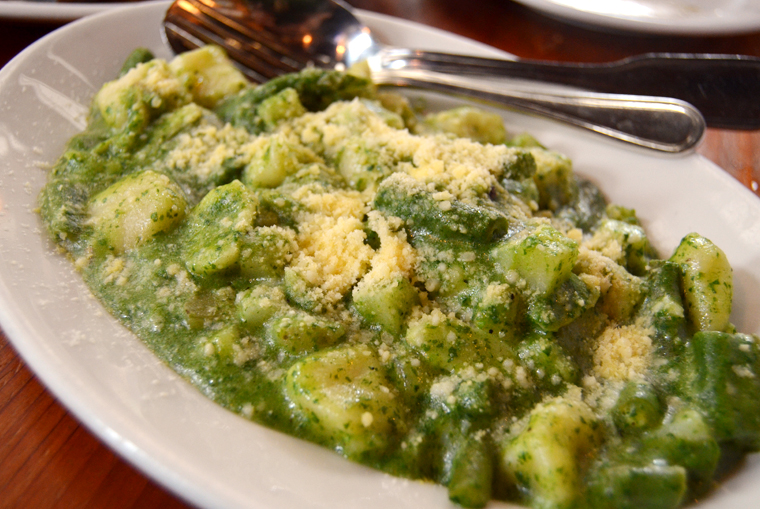
quartino_gnocchi
The entrees:

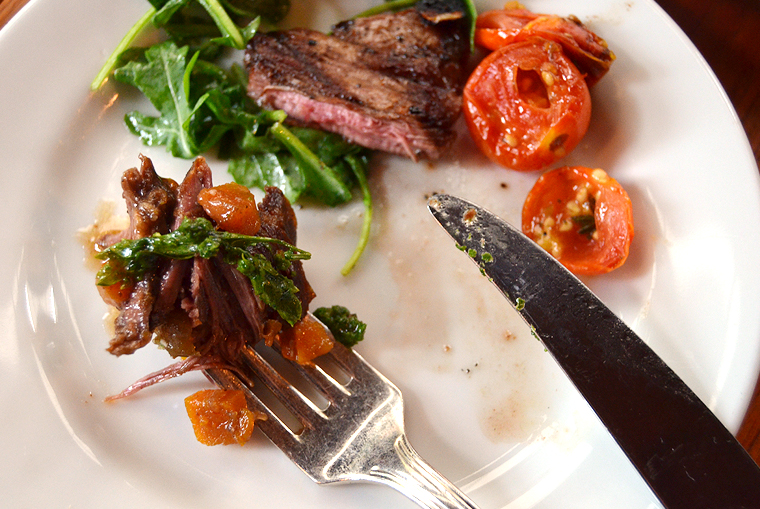
Organic Veal Skirt Steak with Wild Arugula, Cherry Tomatoes and Lemon: The steak was very nicely cooked with an intense seared beef taste, which really amplified the mild flavor of the young beef. This was further enhanced by the sweet roasted cherry tomatoes and lemon, and the blanched arugula was a very tasty way to sop up the seared juices.
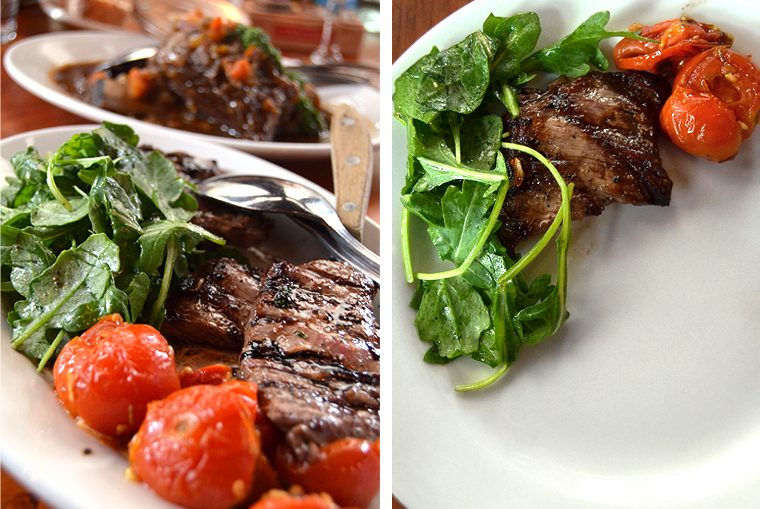
quartino_veal2

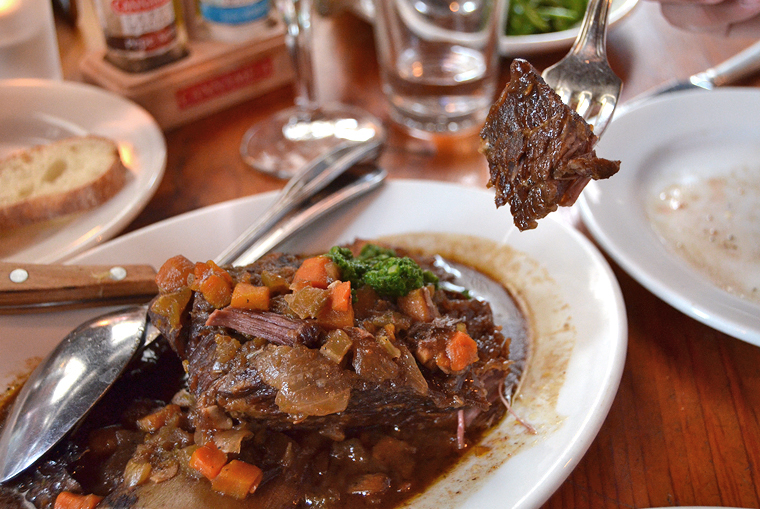
quartino_beef ribs3Beef Short Ribs with Salsa Verde: These were marvelous short ribs, where do I begin. When the plate arrived at our table, the presentation alone was jaw-dropping. A large rib-bone with a generous chunk of beef atop, ladled with pan juices and topped with salsa verde looked like a magazine cover, so pretty I was hesitant to touch it with my fork.  No knife needed, this was the most tender short rib I have ever tasted, so lovingly prepared it nearly brought my husband to tears. This is the definition of melt-in-your mouth tender, and perfectly executed, I think this was the stand out among everything that we tried. The flavor was so rich and the salsa verde stood in stark contrast cutting the richness and balancing the dish wonderfully.quartino_shortrib
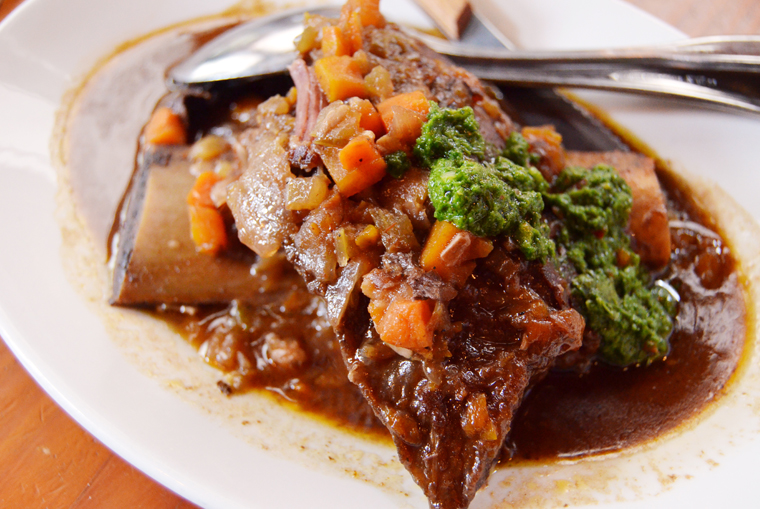
quartino_beef ribs2-2Lastly, the desserts:

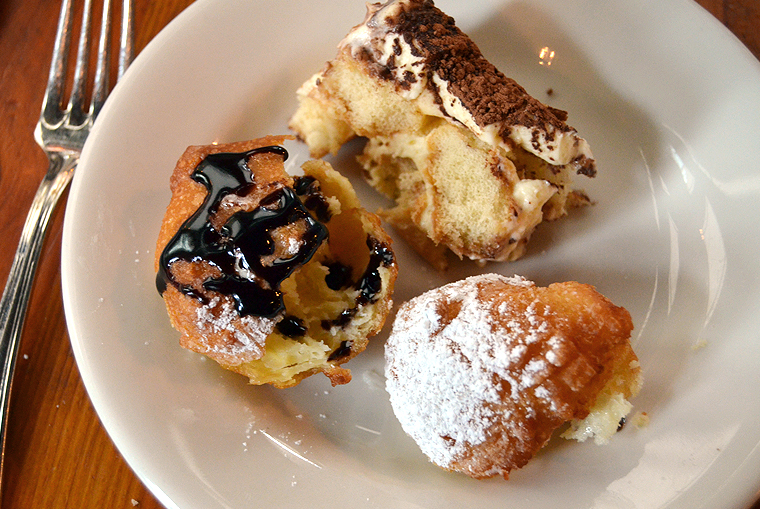
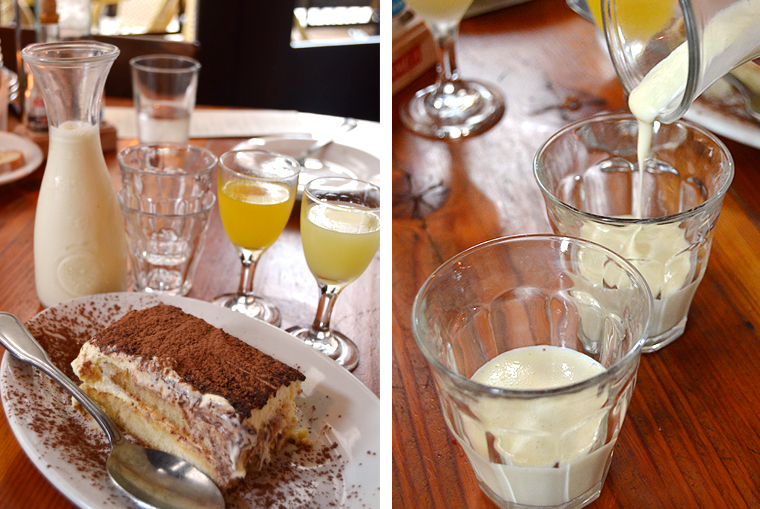
Tiramisu: We’ve all had tiramisu but you haven’t had Chef Coletta’s tiramisu. How does his version differ you ask? The familiar soggy ladyfingers soaked in cold espresso have been upgraded to a tender, moist cake with hints of espresso throughout. Subtle in its presentation, what really shines is the extra creamy filling, and it’s not overly sweet. I found it delicate and superb.

Sgroppino: As a cross between a prosecco cocktail and a dessert, Sgroppino is a traditional palate-cleansing Italian dessert that is versatile enough to be served as an aperitif. Sgroppino was invented by the Venetians in the 16th century, the name comes from the Venetian dialect and means “to untie a little knot”, that is, the knot in your stomach after too much delicious Italian food. This cocktail is very popular in the Veneto region of Italy, made from lemon gelato, vodka, and a bubbly prosecco. When you mix all three of these delicious ingredients together you get a creamy-smooth, frothy dessert, which came served in a Quartino, or quarter-liter wine carafe, as a perfect way to top off a large meal. If an aperitif serves to open the appetite, this one is a pleasant way to close it.
quartino_dessert1
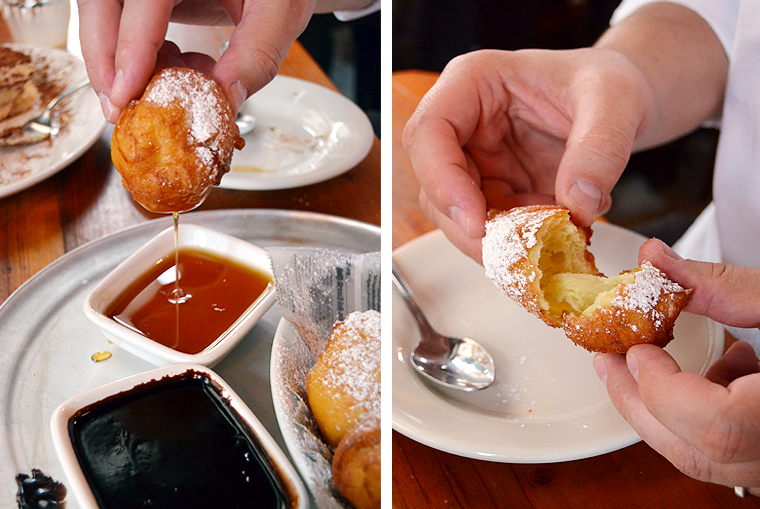
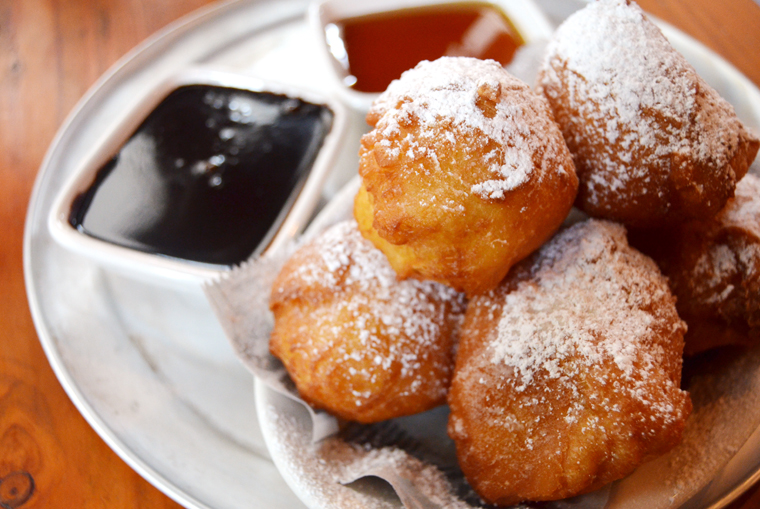
Zeppole: These Italian doughnuts more commonly known as beignets are fried golden crisp. The shell texture is a more pastry-like compared to regular doughnuts with a light, airy sponge interior with hint of lemon. They are served with powder sugar on top and accompanied by a dark chocolate espresso sauce and delicious wildflower honey.quartino_zeppole
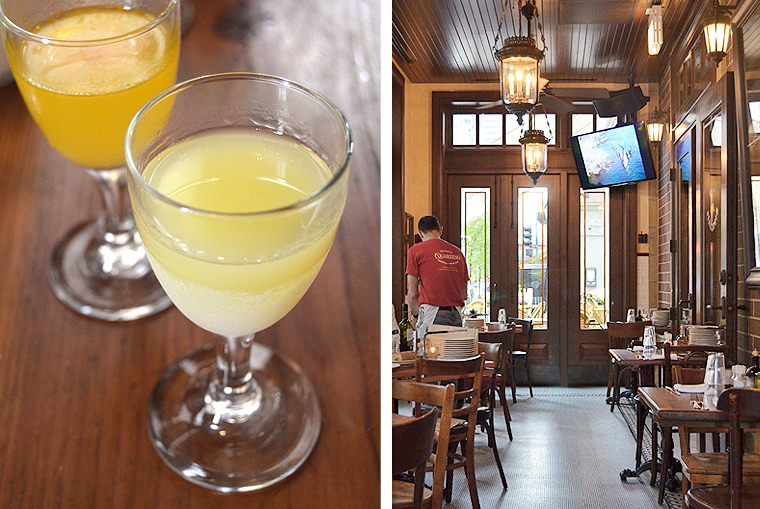
quartino_zeppole1House Made “100 Lemon” Limoncello and House Made “Siciliano” Orangecello: It has been said that the very best Limoncello comes from Sicily. The method of preparation starts with the zesting of 100 Sicilian lemons, and this is the closest you will get to Sicilian limoncello without a passport. Chef Coletta’s method yields the tastiest limoncello I have ever had, with droplets of lemon oil on the surface floating above a cloud of residual zest. The orangecello is prepared the same way, and was a delightful alternative, should you need one. Intensely flavored, these are sweet on the finish, and do a fantastic job of refreshing the palate after a rich meal. You should try one of each!quartino_limoncello-2
quartino_dessert2Overall, Quartino has an inviting atmosphere, lively with the busy wait staff delivering impeccably prepared dishes at a dizzying pace. There is a little something here for everyone. Serving over 30 fine imported Italian wines hand-picked by Chef Coletta, many of which are undiscovered gems from small local producers all across Italy and offered at great prices, Quartino is the perfect wine bar for after work drinks and small plates. The menu accommodates everything from a special date to a night out with friends. A large upstairs dining room is available to host parties and special occasions. If you are ready to try true, authentic Italian cuisine, and enjoy uncompromising quality, in my opinion Quartino is the best place in town to get it.
Paris Club Restaurant in Chicago

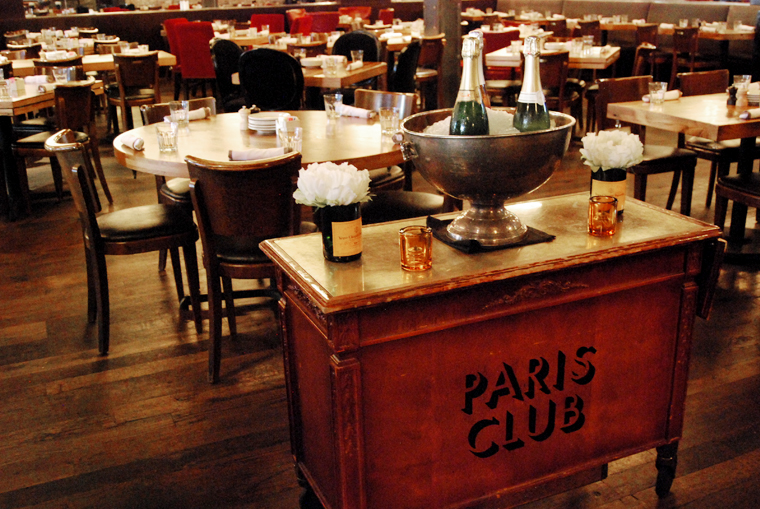
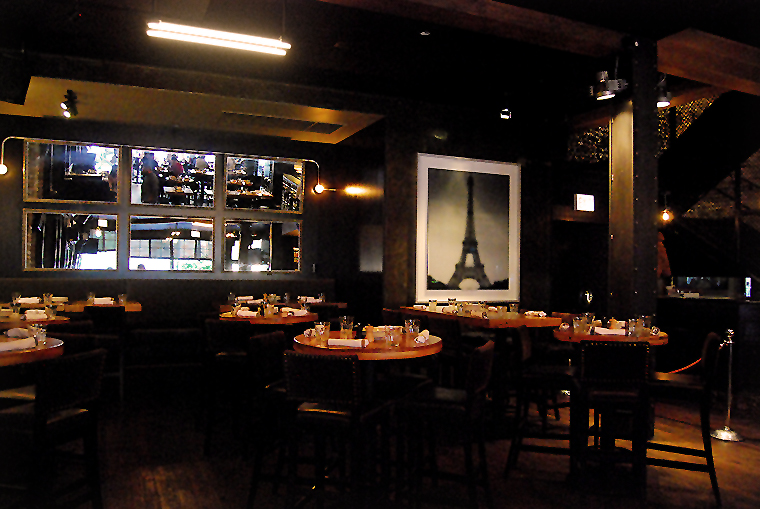
parisclub8-copyright2012-2013_3 copyI have to confess that even before arriving at Paris Club, I knew I was in for something special.  When I started this blog I was living in Europe, where I was inspired by the variety of cuisines that were all around us; my favorite of course being french food. As I first stepped into Paris Club, I was whisked away to a French bistro by the soothing dark wood finishes, warm, subdued lighting, brass hardware, and exposed black ironwork girders that reminded me of the Eiffel tower itself.  The long, Parisian-style bar and leather upholstered chairs contrasted with the gleaming white subway tiled walls creating an authentic urban Paris feel.  The spacious dining room was divided into two large rooms, the furniture reminiscent of a 1920’s cafe. The only thing missing is the jet lag!
parisclub9-copyright2012-2013_3 copy

parisclub4-copyright2012-2013_3 copyWe were greeted at the door by an attentive hostess and waitstaff.  There was no rehearsed “I’m so and so, I’ll be your server today”; instead, a very chic and presentable server in a small, neat black apron and black shirt; polite, self-assured, and soft-spoken came to our table to welcome us and offered to take our drink order. We started with the ‘la colombe’ French-press coffee. It arrived at our table a minute later as our waitress pressed it just before filling our cups. In addition to the coffee we ordered two apéritifs, the Parasol and the Champagne punch. The Parasol was a light, elegant sparkling wine cocktail flavored with lillet blanc and st. germain liqueurs and honey. The slightly sweeter Champagne punch, c.1862 was flavored with pineapple, raspberry, and lemon. Both were delightful and just the thing to open up the appetite.

parisclub5-copyright2012-2013_3 copy

parisclub10-copyright2012-2013_3 copy

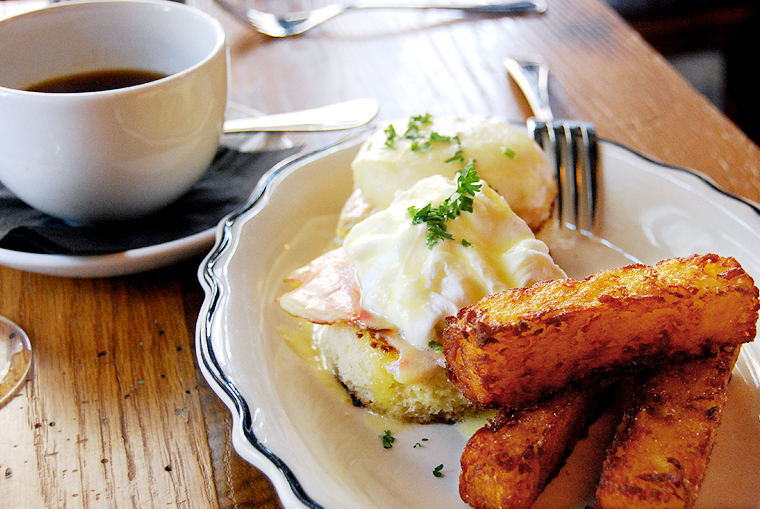
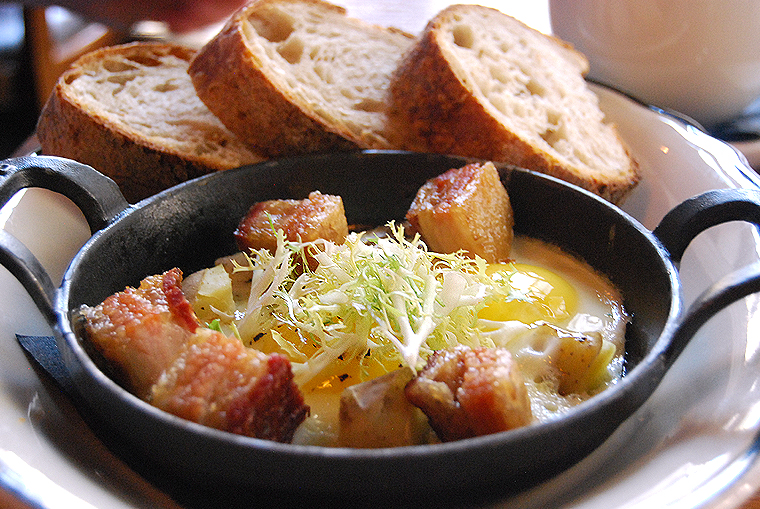
parisclubThe first dish consisted of oeufs au plat which arrived in a small cast iron skillet and consisted of two gently cooked eggs with tender sliced fingerling potatoes and generously sized cubes of succulent fried pork belly, topped with a delicate frisee salad and accompanied by three hearty slices of a rustic farmhouse-style bread. Artisan bread of this quality is something that we miss terribly since moving back to the states. The other dish was a classic eggs benedict, with house-cured ham on top of tender brioche with a velvety hollandaise and two expertly poached eggs, alongside three savory, deep golden-brown hashbrown fingers.
Having dined in France quite a few times while living abroad, the delicate techniques and refined flavors were spot-on and the service was truly impeccable. Paris Club succeeds in presenting classically-inspired French cuisine to the lively River North area right in the heart of downtown Chicago, and at very reasonable prices.
parisclub12-copyright2012-2013_3 copy

parisclub11-copyright2012-2013_3 copyFrench Chef Jean Joho teamed up with restaurateurs RJ and Jerrod Melman to bring a taste of authentic French bistro to Chicago. Chef Joho, born in Alsace, France began his formal training at age 13 at L’Auberge de L’Ill, and later studied at the Hotel Restaurant School in Strasbourg while continuing to perfect his skills in kitchens across Europe. He currently runs 3 restaurants in addition to the Paris Club; Everest in Chicago, Brasserie Jo in Chicago and Boston, and The Eiffel Tower Restaurant in Las Vegas.

Leading the kitchen is Executive Chef Alex Ageneau. Originally from the Vendée region of France, Ageneau started his culinary career as an apprentice charcutier at the age of 15. At age 18 he set off for his culinary journey working with some of the world’s top chefs in France, London, Los Angeles and Chicago. At the age of 22 he was promoted to sous chef for Patina in Los Angeles and later worked with David Feau as executive sous chef at The Royce. Ageneau now heads the kitchen at the Paris Club where taking cues from his French heritage, he brings his personal style of cooking to some of his favorite traditional French dishes.
parisclub13-copyright2012-2013_3 copy

parisclub1-copyright2012-2013_3 copy

parisclub15-copyright2012-2013_3 copy

Chef Alex Ageneau said in an interview with River North Beer “I love traditions. I look at it with a critical eye, because some traditions are no good…but the roots of terroir are there, and they’re there to guide you. It’s about taking the tradition, without living in the past and adapting those traditions to today’s palates and tastes. I think when you have a beautiful culture it’s important to have respect for terroir that’s been going on for thousands of years. I’m very attached to my roots and where I come from. I just try to grow with it.”

Paris Club receives 5 stars in my book. The wonderful atmosphere, the pleasant and attentive wait staff, the splendid cocktails, and of course the magnificent food were all perfect. It truly is like going to Paris for brunch without hopping on a plane.

Sources:
http://www.rivernorthbeer.com/News/NewsDetails/106
http://starchefs.com/cook/chefs/bio/alex-ageneau

A tropical breeze

Tropical Breeze DrinkI’m surrounded by a sea of turquoise water, the sparkling bluish green revealing gem-like corals and a parade of colorful fish darting about only inches beneath the shimmering surface. Some even surface for a gulp of air. As I wander along a deserted stretch of white sands, I notice there are no ships in sight; I scan the horizon and not a single white mast, just crystal blue waters set afire by the intense tropical sun.
rum4_copyright2012-2013

rum3_copyright2013

rum1_copyright2012-2013
I sit with my feet buried in the cool sand that lies beneath the hot surface. The warm breeze is perfumed by tropical flowers and I begin to drift off to sleep to a chorus of waves breaking on the sandy shore. This is the most tranquil place I can imagine.
rum6_copyright2012-2013

rum7_copyright2012-2013

rum2_copyright2012-2013The icy cold drink next to me sweats in the heat, a combination of pineapple nectar and coconut cream, made strong with dark island rum. Beads of water are dripping down my hand as a take a sip. It is then that I open my eyes. The tropical vacation will have to wait, but the refreshing cocktail is only moments away. Close your eyes as you take the first sip.
rum8_copyright2012-2013

rum9_copyright2012-2013

rum10_copyright2012-2013

Tropical Breeze (Cocktail)

Ingredients
2 ozs pineapple juice
1 T. cream of coconut
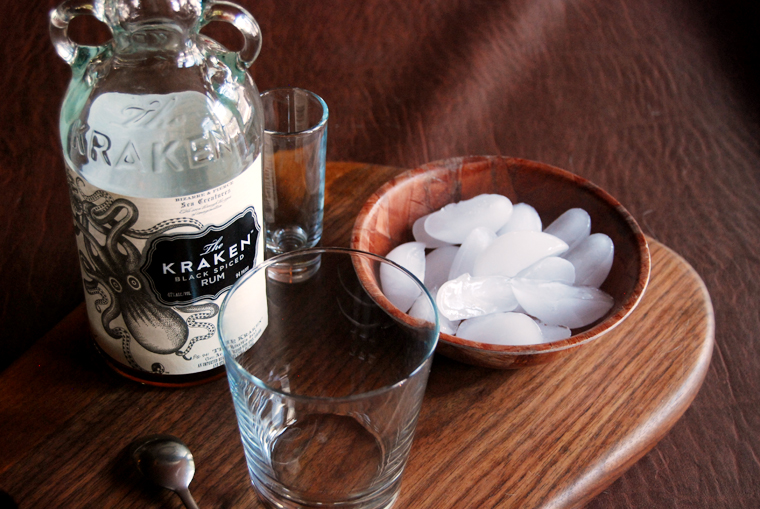
2 ozs spiced rum (I like to use Kraken or Captain Morgan Private Reserve, but white rum will do
8 ice cubes

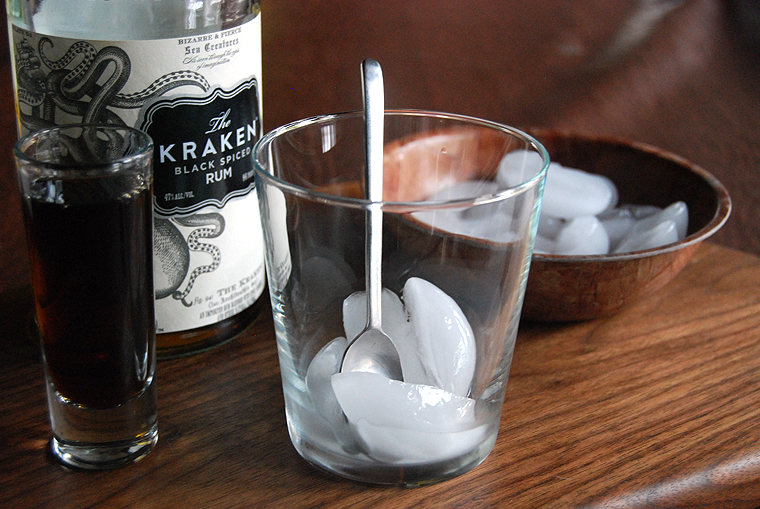
Fill a tumbler with 4 ice cubes. Add rum, pineapple juice, coconut cream, and stir. Add another 4 ice cubes and garnish with a pineapple slice or skip the fruit and enjoy.

Hello Fresh {review}: Cook gourmet meals in your home kitchen

hellofresh1_copyright2012-2013There on my doorstep sat a big brown box; why, hello there I thought. The box was from Hello Fresh, a meal delivery service for aspiring gourmets. Each and every dish has been designed by the executive chef of a Michelin-starred Manhattan, New York restaurant. I was given the choice of reviewing either a classic or vegetarian menu, and my box arrived a few days later. They are available in increments serving 2, 4 or 6 people and arrive weekly with a subscription. Everything is pre-portioned and laid out with clear, easy-to-follow illustrated instructions, complete with step by step photos to suit even the total beginner. Hello Fresh leaves out all of the question marks that come with choosing a recipe and selecting ingredients, but still allows you to cook from scratch so you know exactly what is in the food you eat, and you know it is healthy and nutritious. Most pleasing to me is that each ingredient is portioned to eliminate waste, removing the guilt of throwing away left over meats and vegetables that didn’t make it into the dish.hellofresh27_copyright2012-2013I first became aware of Hello Fresh while living in Germany when a friend of mine gave me a discount card he had received in the mail. We never had the chance to try them out before we moved back to the states, so I was very excited when Hello Fresh approached me to review one of their boxes. Barely able to contain my excitement, I reached for my camera and a pair of scissors and snipped the plastic straps.

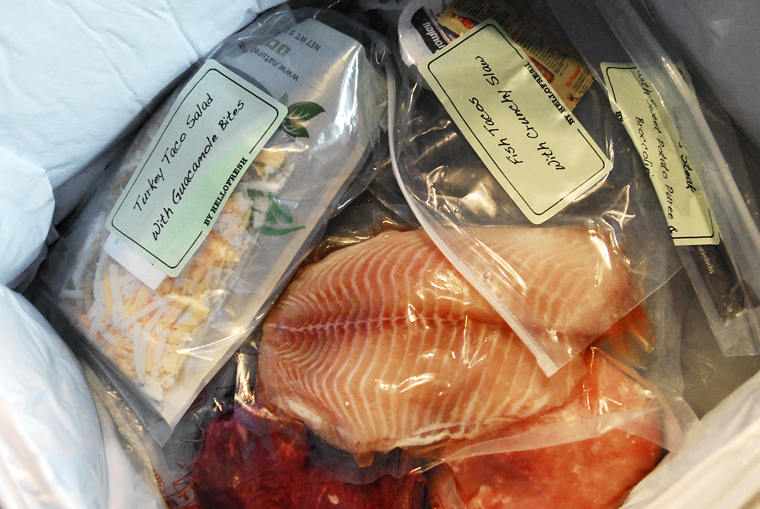
When I opened the lid, I was greeted with a blanket of thick insulation revealing a variety of beautifully fresh produce packed neatly in labeled plastic bags that looked like it came straight from a farmers market. Every vegetable was perfectly ripe, beautiful and flawless, obviously hand selected with care. Especially impressive was the avocado, so perfectly ripe, with none of the bruises grocery store avocados often suffer from having been squeezed by all those rough hands. Beneath the produce were neatly butchered and packaged steaks, firm, pink Tilapia fillets, and a pouch of nicely minced ground turkey. These lay atop 4 very large, and still very cold, chiller packs that assured everything arrived cold and crisp. Also included in the box were the assorted sauces, spices, and crunchy salad toppings, and generous bundles of fresh herbs. True to their name, all of the ingredients were super fresh and pre-washed, in neatly labeled, sealed plastic pouches. The only ingredients I needed to add were a couple of tablespoons of butter, a few dashes of olive oil, and salt and pepper, and that’s it! Sound too good to be true? I thought so too, so let’s see how the recipes unfold..

hellofresh28_copyright2012-2013

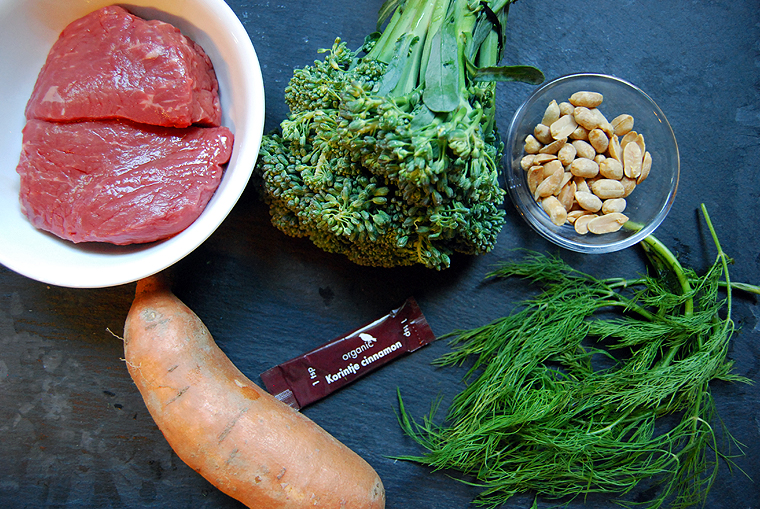
hellofresh29_copyright2012-2013The box I received contained three meat dishes and everything was labeled for each dish so there is no confusion. One of the recipe called for cinnamon, and the package contained a little packet of organic cinnamon, pre-measured to 1 tsp! Each recipe comes printed on a sleek, 2-sided black recipe card with photos of all the ingredients, and each step of preparation, along with nutrition information. The three recipes I received were seared steak with sweet potato puree and broccolini, fish tacos with crunchy coleslaw, and turkey taco salad with guacamole bites. I couldn’t wait to start cooking!

Fish Tacos
My first thought while unpacking the fresh Tilapia fillets was that I have never cooked fresh fish before, and I was a bit intimidated about cooking it properly. I have cooked frozen fish before, the kind of thing that you thaw out and fry/grill/bake till golden, but this was a nice piece of fish. I had heard of fish tacos before, but always thought they sounded gross. But for some reason people were always telling me how good they are.

hellofresh7_copyright2012-2013Seafood meets mexican was a combination I had not yet experienced, so I thought that this feeling, in combination with the difficulty of properly cooking the fish would make this the most challenging of the three dishes, so of course I made it first! It was actually pretty easy, the cooking directions and cooking time were spot on and I ended up with two lovely pieces of fish, lightly browned on the outside, and moist and tender inside.
hellofresh4_copyright2012-2013

hellofresh5_copyright2012-2013

hellofresh6_copyright2012-2013

hellofresh8_copyright2012-2013
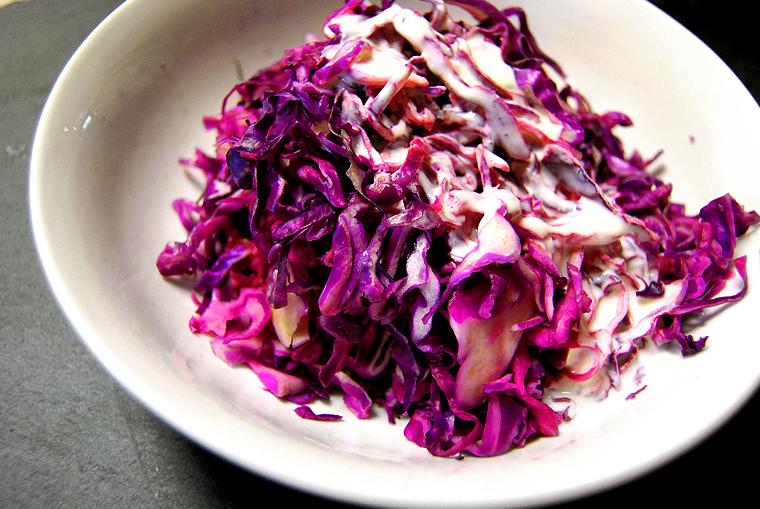
After coarsely chopping the fish I assembled the tacos as directed and they were fantastic! The tangy crunch added by the fresh slaw made with red cabbage, sour cream, and lime juice was the perfect balance to the rich, tender tilapia.  The sliced avocado added a creamy smoothness that made cheese totally unnecessary. Also included were two packets of Tapatio hot sauce, but I needed a bit more to suit my tastes. After this meal I will start cooking with fresh fish more often, and the next time I see fish tacos on a menu I will be sure to recommend them to my friends!
hellofresh9_copyright2012-2013

hellofresh10_copyright2012-2013

hellofresh11_copyright2012-2013

Turkey Taco Salad
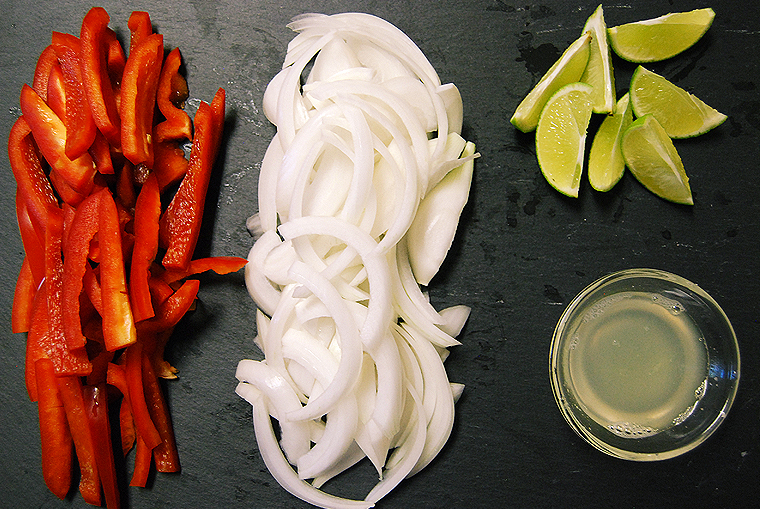
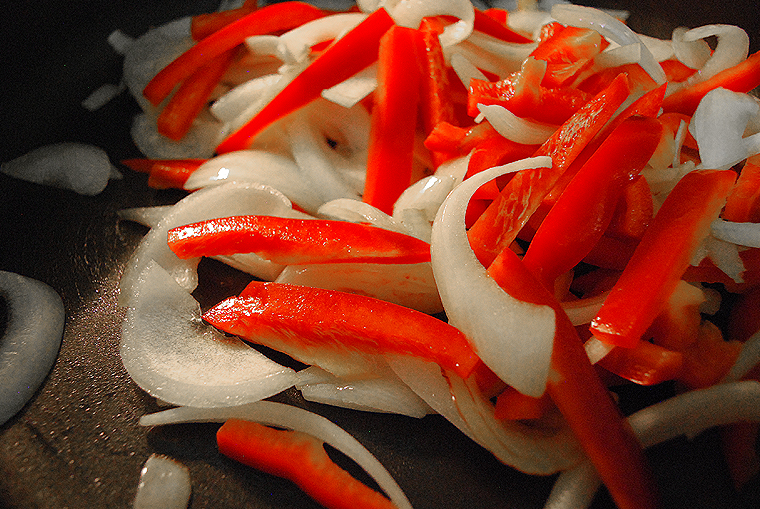
The salad was quite easy to prepare; chop and saute the vegetables in a splash of olive oil till they just start to color up, then set aside and cook the turkey in the same pan, so cleanup was easy. I arranged the lettuce and tomatoes on a serving platter, scattered the turkey and spooned on the vegetables, garnishing with chopped cilantro, lemon juice, and crunchy guacamole corn bites.
hellofresh30_copyright2012-2013

hellofresh12_copyright2012-2013

hellofresh13_copyright2012-2013

hellofresh14_copyright2012-2013The mound of salad was enough to feed 4 but this is not a complaint.  As a main course it was fantastic and made an excellent and filling yet light lunch on a 90+ degree day. This would be really good in a salad wrap and the next time I will try browning and slicing turkey breast as an alternative to ground turkey. The only complaint I have is the relatively high fat content, 40g per serving, mostly due to the guacamole bites which, although quite tasty, contain a lot of fat. Next time I would use much less of them and add some crumbled bacon instead. That’s what I call a strategic use of fat.hellofresh15_copyright2012-2013

hellofresh16_copyright2012-2013

hellofresh17_copyright2012-2013

Seared Steak with Sweet Potato Puree & Broccolini
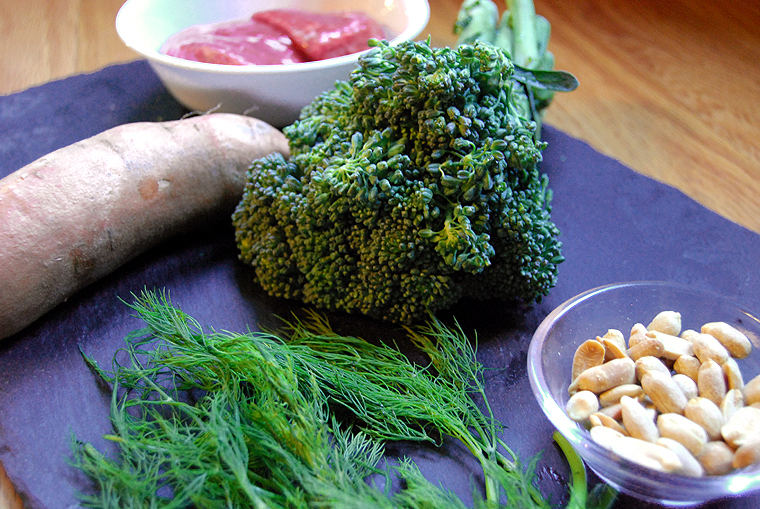
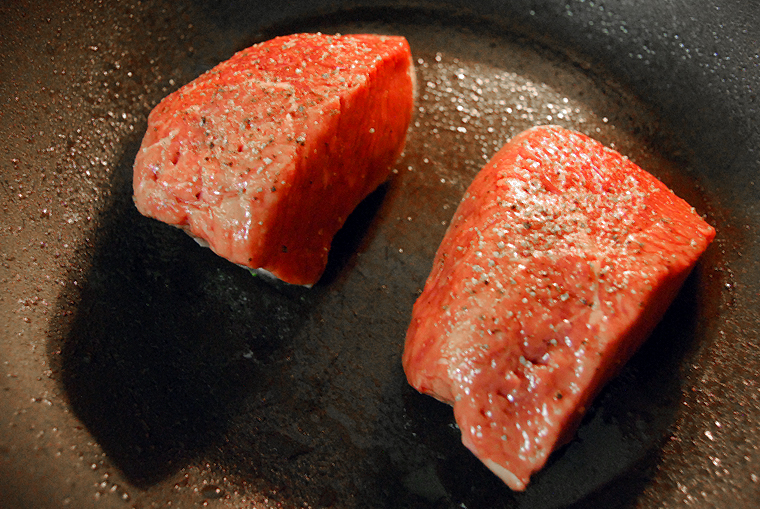
This was a very delicious meal and if plated well, gives a very nice presentation. The seared broccolini with pan-toasted peanuts and dill was amazing. The steaks were fantastic, and although steaks are another intimidating subject for me, I followed the directions to the letter and the results were perfectly seared, tender and juicy, and just pink enough in the middle to suit me. My only complaint was the amount of cinnamon in the sweet potato puree.hellofresh18_copyright2012-2013

hellofresh19_copyright2012-2013The recipe called for 1/2 tsp. but I found it totally overpowering. I am a big fan of sweet potatoes, but I think simply buttered with salt and pepper showcases their natural sweetness; I see no reason to spice them outside the holiday season. They weren’t bad at all, just not to my particular tastes. It was a bit distracting when you have such a thick cut of perfectly cooked and delicious steak on your plate. I thought it was a nice variation on the familiar steak and potato theme, but sweet potatoes to me should be prepared in a savory way outside fall/winter. But the broccolini with peanuts was fantastic and the steaks were truly top-notch.
hellofresh20_copyright2012-2013

hellofresh21_copyright2012-2013I really love the concept of Hello Fresh. Supermarkets dominate our diets with over-processed prepared foods, and picked-over expensive produce that inevitably wilts within half an hour; its nice to try healthy, delicious, wholesome ingredients put together so elegantly.  No celebrity chef endorsements, no pre-packaged seasoning blends, and absolutely nothing frozen or out of season. Just fresh ingredients, clearly packed, with easy instructions, and in about 30 minutes you have a fine dining experience in your own kitchen.hellofresh23_copyright2012-2013

hellofresh24_copyright2012-2013What I loved most about Hello Fresh is that it gave me the opportunity to venture outside of what I normally cook. Fresh tilapia and thick steaks were always a bit intimidating to me, but not anymore. With my new-found confidence I will be picking up these ingredients in the supermarket and seeing what other dishes I can come up with.

An added bonus, the sturdy box that it came in can be re-used to transport meats and dairy, and with the reusable freezer packs I can hit several markets and local farms without worrying about leaving sensitive foods in a hot parked car. And, I felt like a real chef in my own kitchen; chopping, blanching, toasting and searing gave me pure joy with precisely zero hassles.
hellofresh25_copyright2012-2013

hellofresh26_copyright2012-2013If you’re interested in trying out Hello Fresh you will be happy to know that Hello Fresh has offered A Cook’s Canvas readers a $30 discount with the discount code SBJ9NP6. A 3-meal box for 2 usually costs $69 and the vegetarian comes in at $59 and shipping is always free! After my experience with the classic, I’m intrigued by the vegetarian box and I just might have to test it myself. Well done Hello Fresh!

Disclaimer: I was approached by Hello Fresh to test their box and give my review on them at no cost. The review is my own and I received no further compensation for my time or writing.

Grandma Myrtle’s Birch Cake

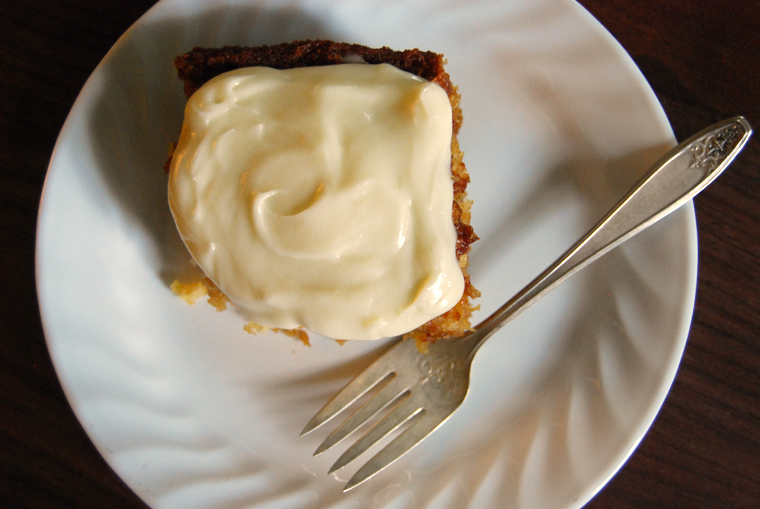
Birch CakeWalking over to the back door she reached behind the oven and pulled out the old step stool, snapping it open with a creak and placing it just next to her working space next to the stove. From a high cabinet overhead she reaches for the flour canister, measuring some out into her brown melamine bowl. I stood on my stool watching her, anxiously waiting to get my hands dusty with flour.
Grandma and IShe measured out the rest of the dry ingredients, giving them a stir before opening a carton of eggs. One by one she cracked them into the bowl of dry ingredients; if a bit of shell fell in she would simply fish it out with a finger, it was all part of the fun and how it’s been done for years.
grandmas birch cake 3_copyright2012-2013

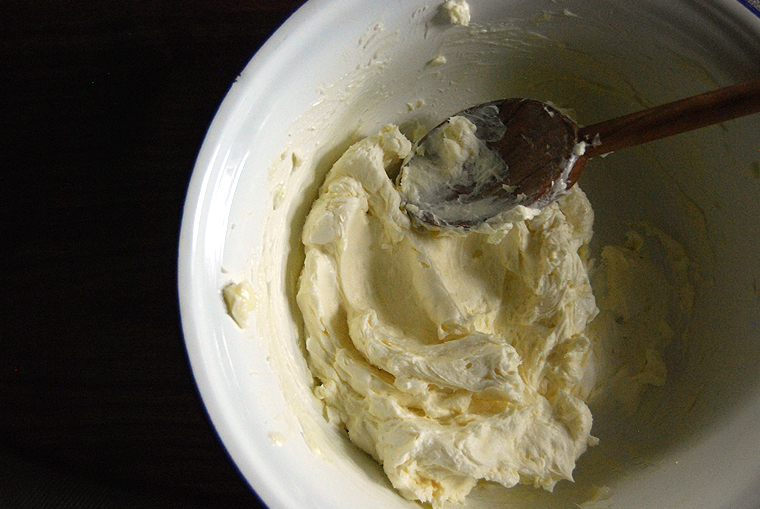
grandmas birch cake 4_copyright2012-2013Opening a can of crushed pineapple she drains some of the juice before handing it to me to dump into the batter, and lets me give it the final stir before she pours it into a buttered 13×9 pan and sliding it into the oven. She peels open a pack of cream cheese and stick of cold butter, dropping them together into another bowl and helps me guide the hand mixer around the bowl to whip them together light and fluffy. Adding the powdered sugar she turns the mixer down low as small clouds sugar appear, and the frosting is just about done. As the smell of a baking cake fills the kitchen I know its only a short time until I get to have a slice.
grandmas birch cake 6_copyright2012-2013

grandmas birch cake 7_copyright2012-2013

grandmas birch cake 8_copyright2012-2013It was many years ago that I watched my Grandma cooking and baking. She made it all look so easy. Tossing this ingredient and that into a bowl, whipping them with a mixer. When the frosting was done, so was the cake, perfectly timed every time. She’d hand me the beaters so I could lick off the frosting while she spread the rest on the cake. After the frosting and cake were one, she’d cut me a slice, poured me some milk, and we sat at the kitchen table eating warm cake. And although most people aren’t baking sweet desserts in mid-July I can’t help thinking of her and every summer find myself baking at least a couple of times.  You see, on July 10th she will have been gone for thirteen years, and I can’t help thinking about her never-fail fudge (which I managed to fail 5 times in a row one Christmas several years ago), fried apple pies, and of course my favorite, her Birch cake. We still don’t know where the name came from, but this cake has been a part of my family since before I was born.
grandmas birch cake 9_copyright2012-2013

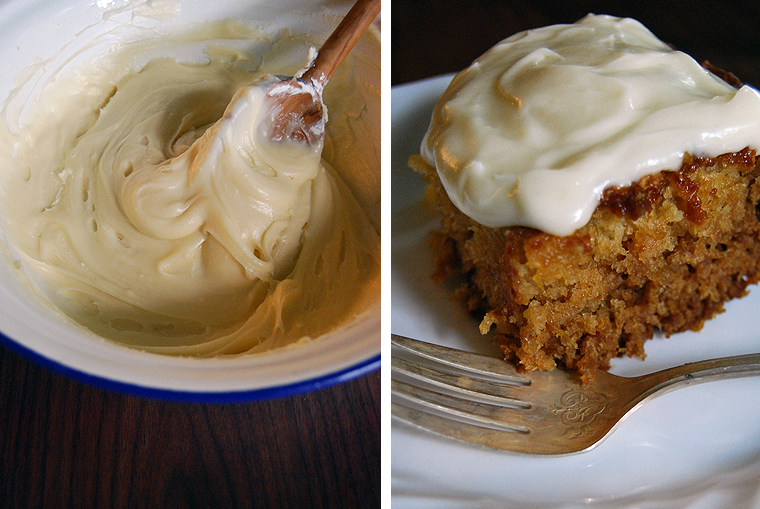
grandmas birch cake 10_copyright2012-2013Her recipe was published in a small cookbook put together by her church many years ago, alongside the cream cheese frosting and never fail fudge recipes but forgive me… since we’ve moved I still haven’t found it in the jumble of boxes that we still need to unpack. Once I do find it, I’ll post a photo of it. This cake could be compared to a pineapple upside down cake but its more buttery, and not as sweet, but it does have the carmelization that forms all around from the sugar and butter. The buttercream frosting is light and fluffy and I still can’t resist licking the whisk after I make it.
grandmas birch cake 11_copyright2012-2013

grandmas birch cake 14_copyright2012-2013She’s been gone for thirteen years today. There isn’t a day that goes by that I don’t think of her and I still get choked up when I talk about her and my voice starts to strain as I hold back tears. She was not only my Grandmother but my dear friend. A picture of her and I sat on my desk in Germany and now I carry it with me. Sometimes I can feel myself being drawn back to the yellow house with the paneled walls, with shelves filled with her collection of carnival glass. The plastic slip-covered yellow furniture inviting us to sit together watching old tv shows with our collies Dusty and Tiny to keep us company. She will forever be in my heart, wherever I go, she is always with me. Grandma this post is for you.
grandmas birch cake 12_copyright2012-2013

grandmas birch cake 13_copyright2012-2013

My Grandma’s Birch Cake

for the cake
2 eggs
2 cups of sugar
1 teaspoon vanilla
2 teaspoons baking soda
1 can crushed pineapple (unsweetened)
2 cups cake flour *

for the icing
2 cups powdered sugar
1 9 oz cream cheese
1 stick of butter
1 teaspoon vanilla

Preheat the oven to 325 degrees

For the cake: Mix eggs, sugar, vanilla, and baking soda together. Add the pineapple and flour and mix. Pour into a buttered 9×13 inch glass pan and bake for 40-45 minutes.

For the icing: Mix the powdered sugar, cream cheese, butter and vanilla together until smooth. Let the cake cool for about 20-25 minutes and then spread the cream cheese frosting on top.

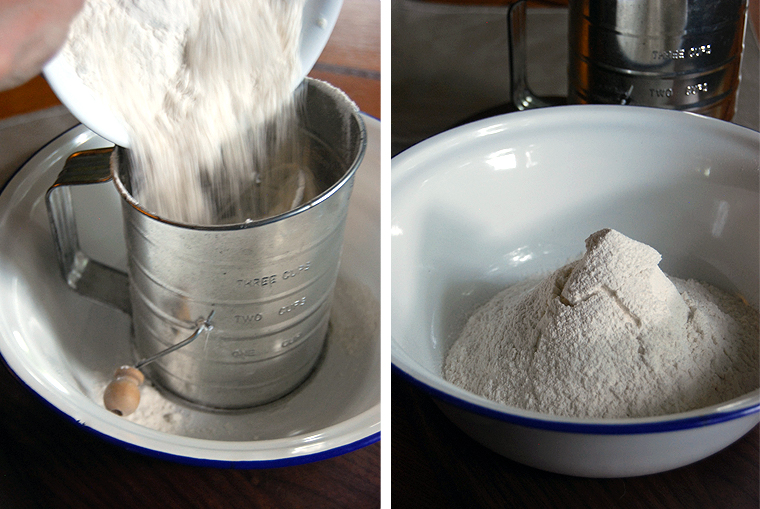
*If you don’t have cake flour you can make your own very easily. For every cup of flour your recipe calls for, take out two tablespoons of flour and return it to the flour bin.  Place the flour (minus the two tablespoons) into a sifter and sift over a bowl. Replace the two tablespoons of flour that your removed with two tablespoons of cornstarch.  Lastly, sift the flour and cornstarch together 6 times.  You just made cake flour!

Note: The cake will look golden and perhaps a little burnt. If this happens, you’ve done it correctly. It is from the sugar and pineapple caramelizing. I hope this cakes becomes one of your family’s favorites as it has been ours for years.

Featured Foodista Food Blog of the Day

It is a privilege that Foodista.com has chosen A Cook’s Canvas for Food Blog of the Day! They featured my No-Knead Bread recipe and I feel honored to be selected. This is entirely unexpected and a big surprise! I couldn’t be more thrilled, especially because being picked as the Food Blog of the Day puts me in good company with fellow food bloggers on Foodista.com. Please head over there to see the many great food and drink blogs that have been featured! If you are visiting from Foodista, welcome!

Foodista Featured Food Blog

No-Knead Bread

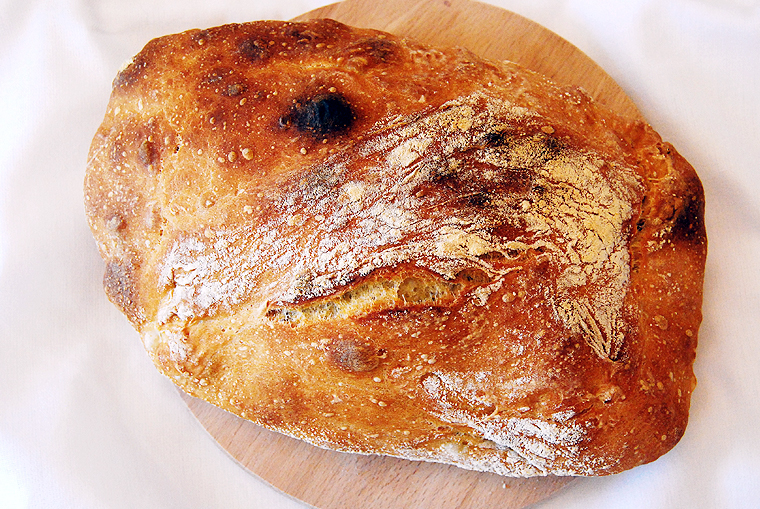
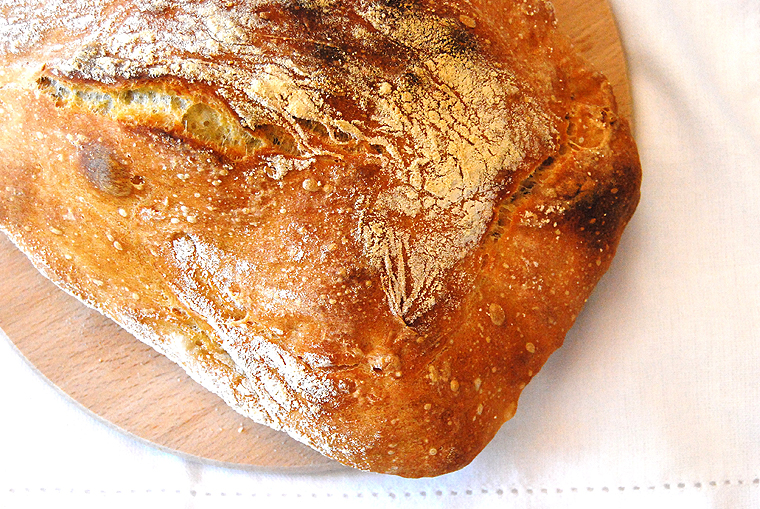
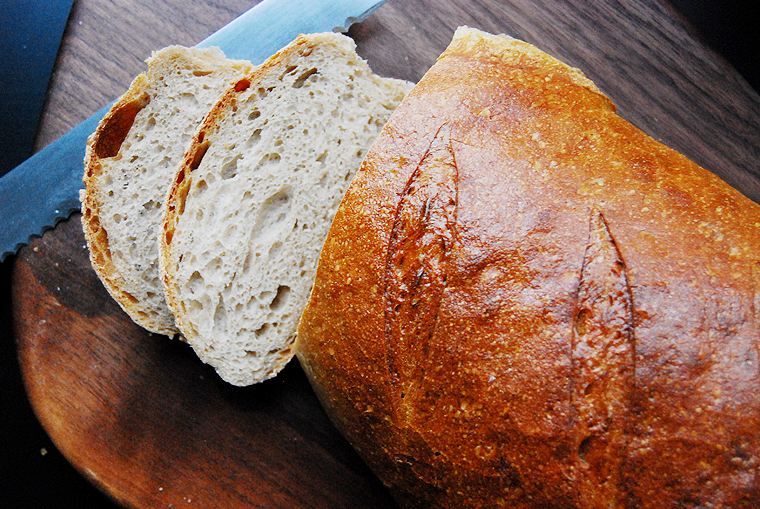
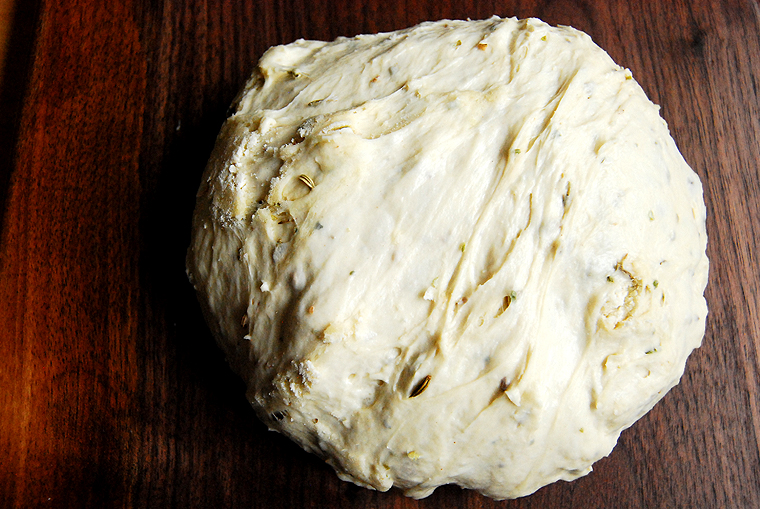
No-Knead BreadIf you enjoyed my last post about German breads and would like to try baking bread yourself, why not start with this easy no-knead bread recipe? I’ve always been intimidated by the idea of baking my own bread, I thought this was too deep of a subject for dabbling, and only a serious baker could produce something with the crunchy crust and chewy, elastic interior of a nice loaf of bread. Also, working with yeast can be tricky and if the temperatures aren’t carefully controlled the yeast will either be killed by too warm a temperature or fail to bubble at all if the temperature is too low. No-Knead Bread The fact is, this recipe is so easy even a child could make it. No sticky dough covered hands, no need for precisely measured ingredients, and best of all – no back-breaking kneading (though I should point out that kneading dough is a great stress reliever, and builds your chef muscles!) You need only one bowl, 4 ingredients, a few stirs with a wooden spoon, and patience to watch it rise.
No-Knead Bread Most recipes call for the dough to rise 12-14 hours, or even overnight. This recipe was originally created by Jim Lahey, founder of the Sullivan Street Bakery in New York City, and calls for leaving it to rise overnight. Jim Lahey technique simply relies on yeast fermentation instead of the usual stretching and punching of dough. Handle the dough gently as overworking it will bust the gas bubbles. This technique alone makes it possible for amateur cooks to make store-quality loaves, crust and crumb with little fuss. Mark Bittman of the New York Times adapted it, cutting the rising time down to 12 hours, but I’ve found that you can reduce the rising time down to 3-4 hours and still produce a great loaf, although the longer you let it rise, the more tangy sourdough flavor it will develop.
No-Knead Bread Of course you could just as easily hop in your car and head to your local bakery to pick up a loaf but have you ever experienced the joy of freshly baked bread coming out of your very own oven? The smell will have you standing impatiently in front of your oven waiting for the timer to go off. The crunchy sound of the golden crust as you slice the first piece and the steaming interior will have you taking the first bite without butter or jam, and and the taste makes it hard to resist eating a second slice.

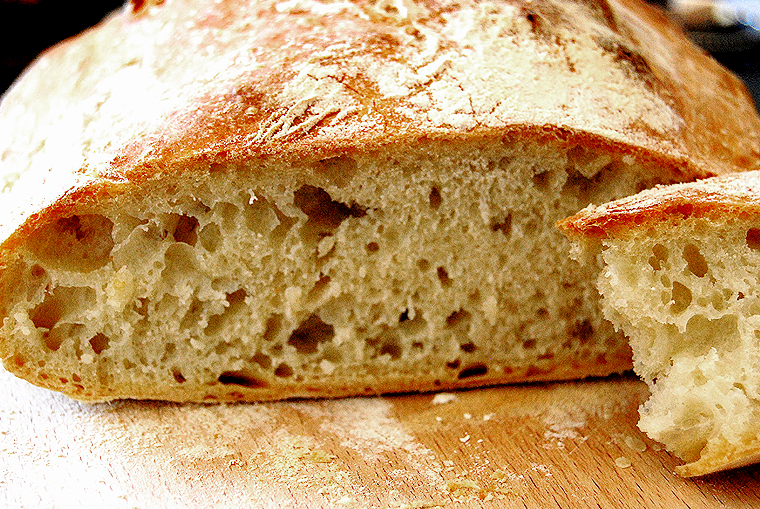
This recipe is a cross between a rustic country bread and a sourdough. The interior has a chewy and spongy texture with large holes and pillow-like interior is perfect. Add a swipe of salted butter and you are transported to a rustic country bakery. Sound too good to be true? Try it… and you’ll see.
No-Knead Bread

No-Knead Bread
makes 1 loaf

3 cups bread flour (In Germany choose 550 or white all purpose flour will do as well)
3/4 teaspoon yeast (I used instant but you can certainly use fresh)
1-1/4 teaspoon himalayan or sea salt
1-1/2 cups water
1 tablespoon olive oil

Preheat oven to 450 degrees | 232 celsius

Add flour, yeast, and salt in a large bowl. Add 1 1/2 cups of warm water (between lukewarm and hot, 90-100f or 32-38c, be careful: too hot or too cool and the yeast won’t work) and mix. This should take about 3 minutes and leave you with a thick, goopy dough. Cover with a towel or plastic wrap and leave it in the warmest spot in your house (It doesn’t necessarily need to be your kitchen). Let it sit for 3-4 hours until dough has doubled in size.

Turn the dough out on a lightly floured surface and sprinkle flour on it. Knead two or three times to form it into a ball. Coat with a teaspoon of olive oil to prevent sticking, and place back into the bowl and let it rest for 15 minutes covered.

Pre-heat oven to 450°F. Place a dutch oven (cast iron, steel, enamelware, Pyrex or ceramic) with the lid on in the oven and allow to heat up for 15 minutes. Uncover the dough just before placing it carefully into the heated pot. You will hear a sizzle, this forms a crust on the bottom of the loaf. Cover the pot with a lid and bake undisturbed for 30 minutes. Remove lid and bake for another 15-20 minutes until it’s beautifully browned on top. Remove pot from oven and carefully shake to loosen the loaf before tipping it out onto the counter, then cool on a wire rack.

German Breads

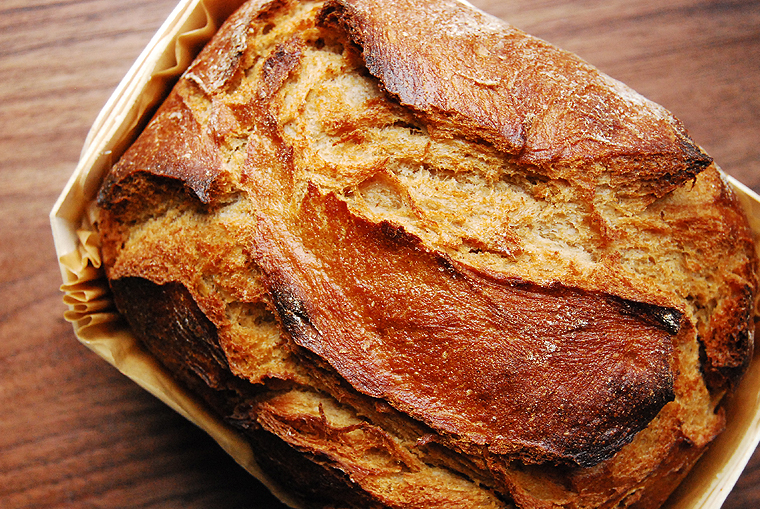
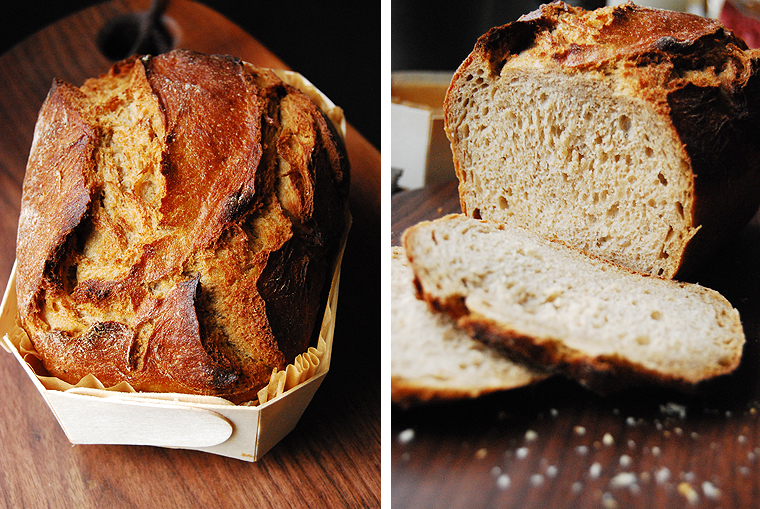
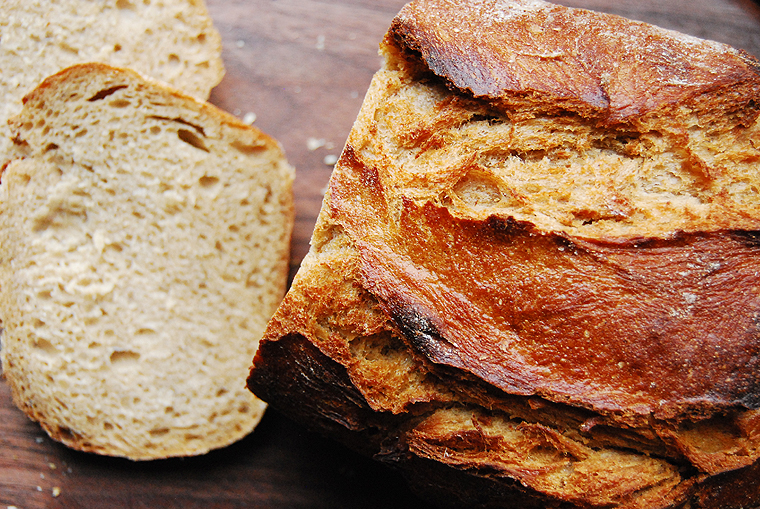
KartoffelbrotI was never really that ‘into’ bread before I went to Germany. I liked bread of course, but I hadn’t really ever thought much about it beyond making toast in the morning or spread with butter at the dinner table.  More often I would choose other carbs such as pasta, potatoes, or crackers and snack pretzels over bread. When we first arrived in Germany we would walk past the little bakeries on every street and smell the wonderful aroma of bread baking, which drew us right inside to see what they were making.  First we discovered the big soft pretzels and flaky croissants but my American sweet tooth quickly drew me into the sweeter pastries like berliners (German jelly doughnuts) and apfel or quarktaschen (apple and cream cheese pockets). It wasn’t until we tried a traditional swabian breakfast at a little cafe that we discovered how tasty all the different breads were!

A typical German breakfast (known as ‘Frühstück’) commonly consists of assorted sliced breads (brot), croissant, and rolls (brötchen or ‘little bread’) accompanied by a plate of assorted cheeses such as aromatic Bergkäse (strong-smelling ‘mountain cheese’), milder ‘Swiss’ cheeses like Emmentaler and Tilsiter, and soft, ripe French cheeses like Camembert and Brie; and an assortment of cured, sliced deli meats such as ham, salami, and smoked salmon (lachs).  In addition, there are various jams (Konfitüre), marmalade  honey, hard-boiled eggs, and (often strong) coffee or tea. Sounds like lot of little things but it adds up to a hearty and filling meal that will easily tide you over until lunchtime (‘mittagessen’, a compound word mit-tag-essen, or mid-day-food) which offers yet more bread choices!
Kartoffelbrot

Kartoffelbrot

Kartoffelbrot
To Germans, proper bread has a good crust and hearty flavor; bland wonder bread is strictly reserved for the toaster (they call it toastbrot). And in many ways, their breads are what defines them. They pride themselves on producing the largest variety of breads worldwide. More than 16,000 local bakeries across Germany bake over 300 types of bread each and every day, each tailoring its recipes to suit local tastes, alongside more than 1,000 types of small bread-rolls and pastries. At the 2005 bread expo in Cologne, there were more than 1,000 distinct varieties presented. Germans are worldwide the biggest consumers (per capita) of bread, followed by Chile.[31] In my experience, Americans are just not a bread-eating nation, and when they eat bread, it is typically white and smooth and found on a shelf in a grocery store.

A few minutes after ordering, a basket of assorted breads and rolls arrived at our table including some topped with pumpkin, sunflower, and sesame seeds, others had oats baked into the crust, and some crusted with flour which had turned golden in the oven. Which did I choose? Tough choice but I reach for the pumpkin seed roll. Pumpkin seeds you ask? In the States you would have a hard time finding bread like this, and I sure haven’t found them locally. As I pulled apart the crusty, dark roll, I pinched off a piece to try by itself before adding butter, cheese, or jam. I can only describe it with one word: Lecker! (Delicious!). Who knew! I grabbed my knife, smeared it with a little chive-seasoned cream cheese and topped it with a slice of smoked salmon. What a wonderful way to start the day! I didn’t realize it at that moment, but breakfast for me was changed forever. This was perhaps the first step in adapting to German food culture.Milchbrot

Milchbrot

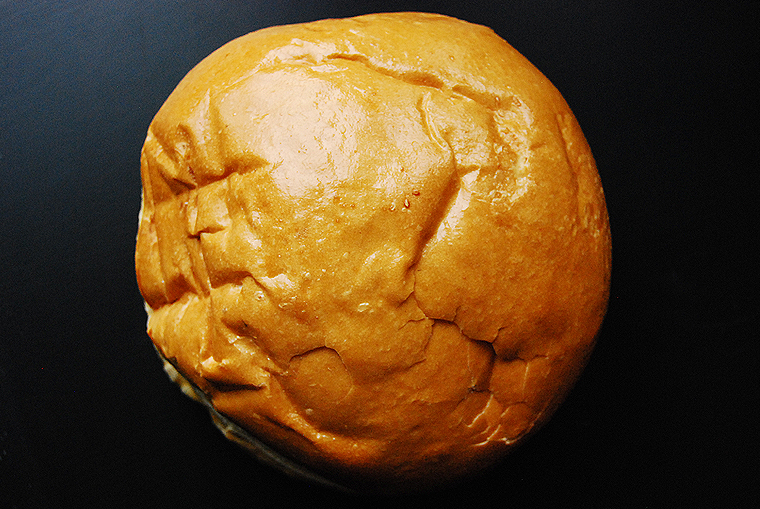
MilchbrotOne morning, I headed to the bakery (bäckerei) on my own, determined to complete my order only in German, and pick out as many breads as I could by name. This was very difficult at first, as the names are very often old-fashioned local slang, in the swabian dialect, and can be very dificult to pronounce. Most of their recipes have been passed down from generation to generation and the yeast cultures themselves, which leaven the bread, can be centuries old and are cherished as they are handed down to the next generation of bakers. Although the variety and quality standards are very very high, these artisinal loaves are so plentiful in Germany that they are still quite inexpensive. A large, 2-pound loaf of fresh, crusty bread costs around $2-3, depending on the grains used, and there is a large assortment to choose from in various shapes, sizes, flavors  and colors. Loaves are offered in every shade from light to dark, and many are made with seeds, nuts, and whole grains. This competition has limited the price of a loaf of sliced white bread in the grocery store to around $1. After a few moments of looking around I chose the milchbrot (milk bread), kartoffelbrot (potato bread), and Roggenmischbrot (rye-wheat bread). Typically, you buy a loaf of bread and it would last you a day or two before drying out, so the baker seemed a bit puzzled as she wrapped up my three loaves and handed them to me over the counter. It was time to head home and get down to business.
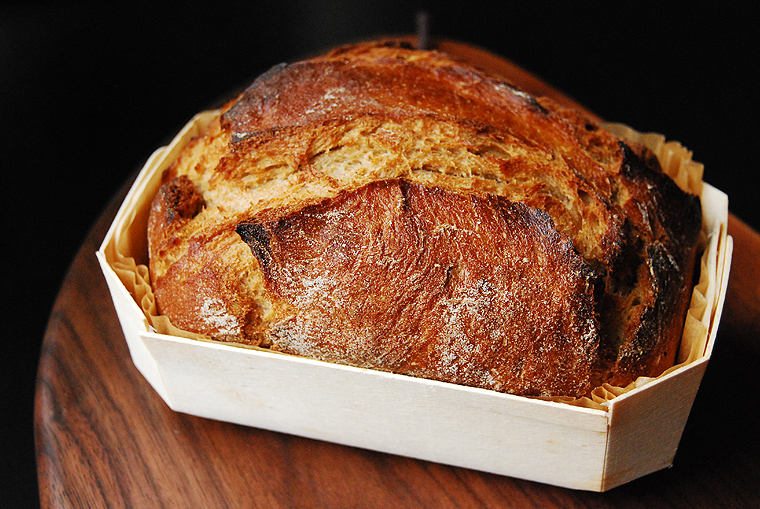
When I arrived home I laid out my new loaves on the table with a cutting board, sharp bread knife, and some tasting additions like butter, sea salt, cream cheese, and a package of smoked salmon. I sat down with all three loaves in front of me and decided to try the milchbrot first. This bread was golden on the outside, and light and airy on the inside. It was something like a brioche. This one I tried by itself with nothing on it, and it was delicious, and would probably be even tastier with a smear of marmalade  and seemed to me a perfect breakfast bread. Next was the kartoffelbrot. This one was baked in parchment inside a little wooden basket and anyone who knows me knows I’m a sucker for beautiful packaging. I sliced a piece off the end of this crispy, dark bread and tasted it. I found it was tangy, with a crunchy crust and tender in the center, and my favorite so far. This would be really great with my favorite spread, a French butter knob that has crunchy crystals of sea salt churned right into it. The last one was the roggenmischbrot. This long, oval, golden bread was crispy at the ends and soft toward the middle. This one is a little sour, tangy and hearty. Delicious as well, especially with a smear of cream cheese, lachs and a sprinkle of sea salt.Roggenmilschbrot

Roggenmilschbrot

RoggenmilschbrotIf you’re ever in Germany, no matter where you choose to visit, be sure to stop by one of the many local bakeries and sample a few for yourself. And don’t fight the urge to smuggle back a loaf or two in your suitcase…

*Note: Bread photos are in order as described.
31:^ “Bread, which is loved, by our neighbors”. Retrieved April 6, 2013.

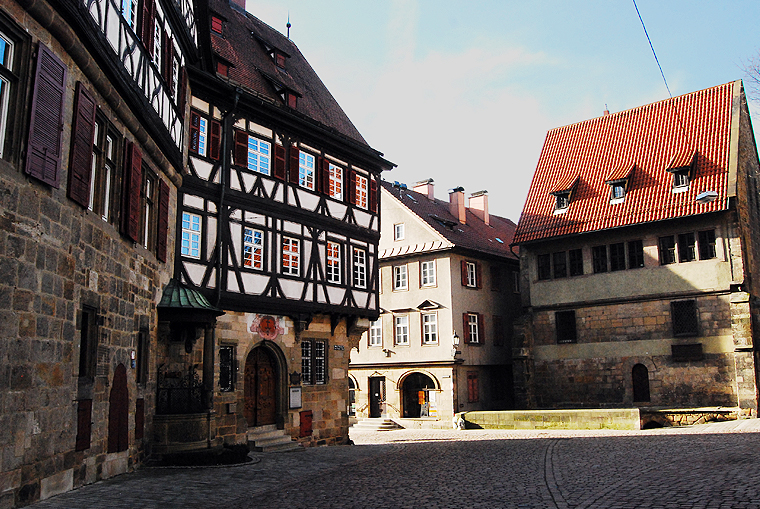
A day at the market – Esslingen am Neckar Marktplatz

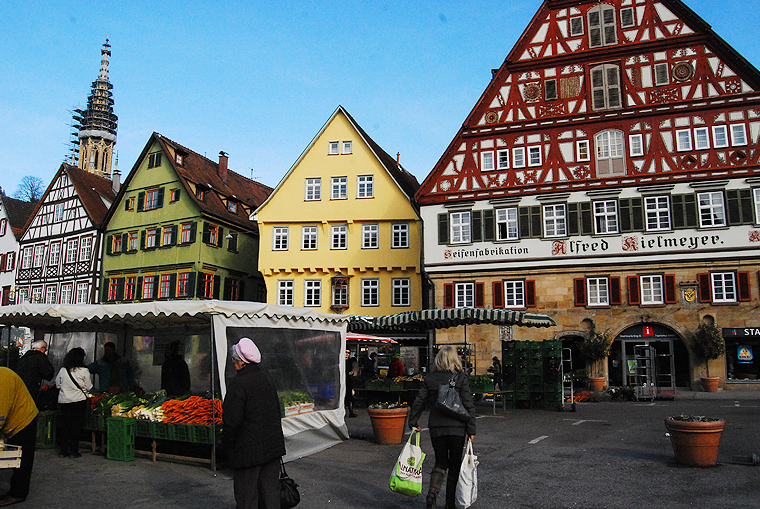
esslingen am neckar market 2Well, hello friends! I’ve missed writing to you. I’ve missed my ritual of brainstorming recipes, shopping for ingredients, cooking, baking, shooting photos and then writing to you about it. We’ve been in Chicago a little over three weeks now and it still seems like yesterday that we said goodbye to our life in Germany and hello again to our friends and family here at home. We were living in an almost empty house surrounded by stacks of boxes, frantically selling everything we couldn’t take with, basically all of our furniture, appliances, and electronics… all the way down to (and including!) the kitchen sink.

We had such a long list of so many things we needed to take care of in preparation for our move back that it kept us constantly busy and tense, worried that something would be forgotten or go horribly wrong. Everything went as planned and we’re happy to be back near our family and friends but now we have this anxious feeling about starting our next “list”. Finding new jobs, a new apartment, opening a new bank account, locating a good vet, choosing a cell provider, etc… While unpacking my suitcase I found my little notebook with my notes from “A Trip to the Farmer’s Market”, a post I had been working on but never had the chance to share with you, and I thought that it’s still not too late. I hope you enjoy reading it as much as I enjoyed writing it. esslingen am neckar market 10A day at the market – Esslingen Marktplatz

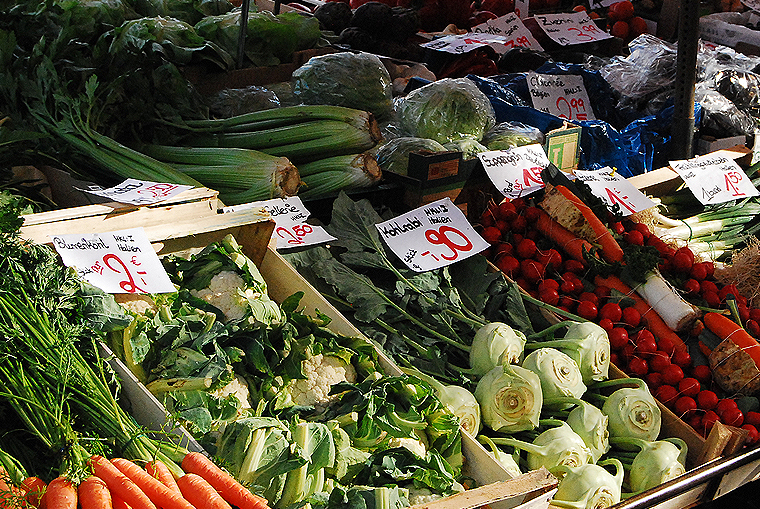
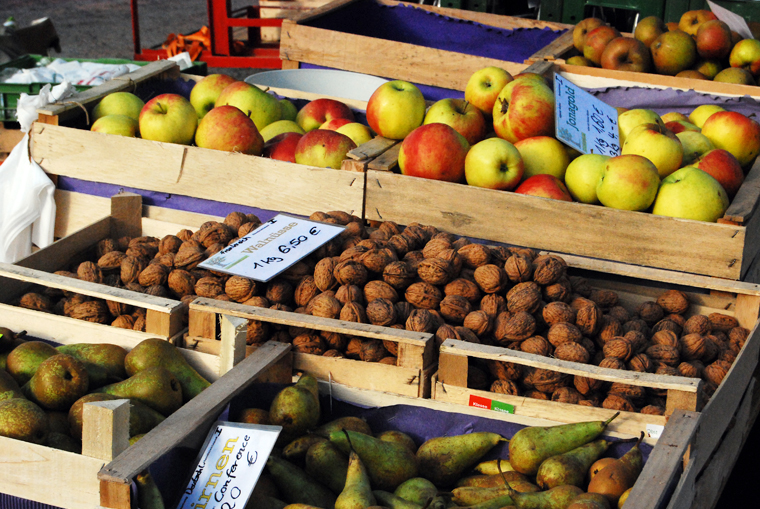
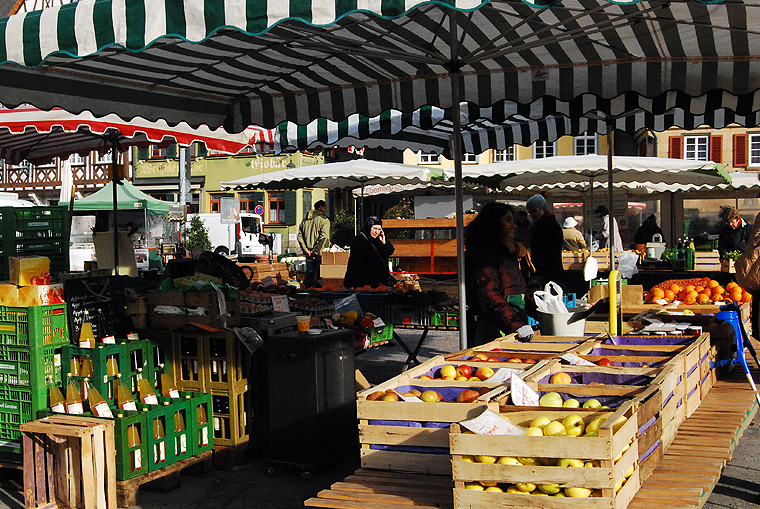
Life here in southern Germany is pleasantly simple. There is a rhythm to life that we never seemed to pick up on in Chicago. The Germans enjoy their routines, and today is one of the twice-weekly market days in Esslingen. I’m standing at the edge of the market square watching the women walk by with their wicker baskets ready to buy their eggs, cheese, meat and produce for the week. Shoppers hover over tables of produce, greeting their favorite sellers and standing shoulder to shoulder, leaving only tiny gaps between them which I squeeze through to grab a few sweet potatoes from a vendor who weighs them in an old copper pail. For a brief moment I’m sure this is all I want but I catch a glimpse of a large, perfectly green head of cabbage that I just can’t pass up, so I buy one. I pack the sweet potatoes and cabbage in my bag as a whiff of fresh bread wafting over from the next stall entices me…
esslingen am neckar market 9
esslingen am neckar market 8
esslingen am neckar market 12
A stop at the local bakery is the typical start to every German’s day.  Every morning you can see people walking to their jobs carrying small paper sacks from the bakery, chewing on fresh baked pretzels, pastry, or croissants. Sounds a little weird I know, but I also have a weakness for warm, freshly baked bread. I always end up buying a loaf or two. There are so many kinds of bread here, light, dark, round, oval, long and skinny, short and fat. Baked from a dizzying variety of grains, some of the most popular breakfast breads have pumpkin and sunflower seeds baked in with still more seeds clinging to the crust. We never really settled on one favorite type but it didn’t matter, they were all good. Satisfying rustic loaves that are crunchy on the outside yet tender on the inside. As I grab a stone-oven baguette I gently squeeze the loaf and listen for the crunchy sound it makes. A fresh baguette with a still crunchy crust will have a soft pillow-like texture inside. A few hours after baking the crust absorbs moisture from the interior, giving both the crust and the center a chewy texture, still tasty but past its best.  These two particular loaves have passed the test and it takes all I have not to break a piece off as I walk along. A few minutes later I realize I need something to eat with my new bread. Should I find a creamy spread, or some olive oil-soaked sun dried tomatoes, or a soft cheese and some fresh chives… or all the above?
esslingen am neckar market 6esslingen am neckar market 14

esslingen am neckar market 7After I buy everything I need, I head to the nearest bakery to grab a bite to eat because my morning at the market has made me hungry. I walk into a little bakery and now it’s decision time. The pastries here in Germany are not quite as sweet as the ones in the States but they are good in their own way. German bakeries take pride in their bread and pastries and sometimes you find a special old bakery where you can peek into the kitchen and see one or two bakers, one of which is probably the owner. The ladies working in the front are normally the wife and relatives of the baker. Admiring the baked goods on display I wonder if I should pick one of my favorites; a light and flaky apfeltasche (apple turnover), a sticky sweet rosinenschnecke (raisin snail!?), or a creamy quarktasche (something like a cottage cheese pocket). Today, the flaky layered croissants catch my eye. Resisting the urge to look up at the row of delicious breads straight ahead, I keep my head bowed and order a croissant and a small coffee because, well, you can never go wrong with a buttery croissant. The outside is golden and flaky, crunchy and tender. It’s wonderful just as I expected.
esslingen am neckar market 3

esslingen am neckar market 11

esslingen am neckar market 15Sitting by a window I notice a woman across the street opening her shutters, latching them in place on either side of the window, just as she certainly does every morning. I couldn’t handle living that close to a bakery, I just wouldn’t be able to control myself especially in the early morning when the scent of freshly baked breads and pastries are wafting in through the open windows.
esslingen am neckar market 13

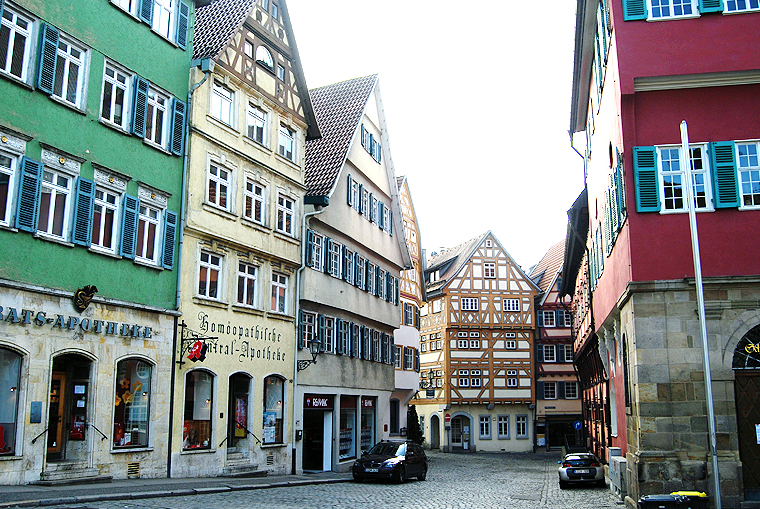
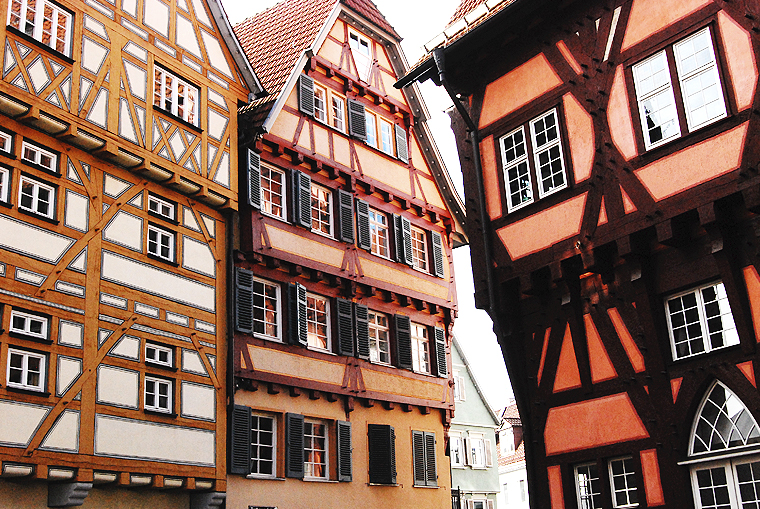
esslingen am neckar market 4I start thinking again of how the pace of life here just makes sense, no hustle and bustle getting from here to there, nobody stressed about schedules and meetings, everyone seems to meander along the cobblestone streets, taking their time to get where they are going.  In the afternoon there are families walking along, dad pushing the baby carriage while mom holds the hand of one or two small children while a three year old, fully independent, trails a few feet behind, no need for the plastic wrist leash that seem to be so common here in the States. Two old men are enjoying their lattes with soft pretzels while laughing and people watching. Just then, one of them finishes their latte, and with a long slender spoon scoops up the last of the frothy milk that is left in the bottom of the glass. The slow, leisurely pace of life here is satisfying.  Every bit as fulfilling as the noisy life we knew in Chicago.
esslingen am neckar market 5

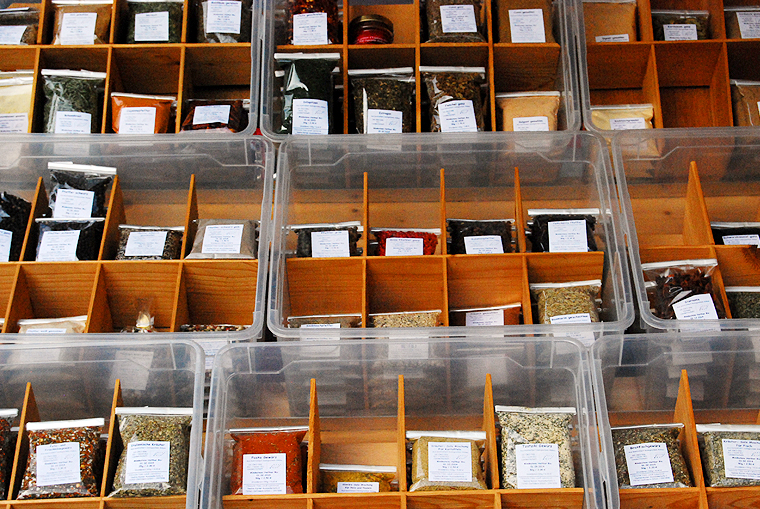
esslingen am neckar spices

esslingen am neckar market 17

Auf Wiedersehen

acookscanvas_auf wiedersehen_7
Hello Friends, I have been fairly quiet here on my blog these last few weeks but for a very very good reason. The winds of change are blowing and after four years of living abroad in southern Germany, we are moving back to Chicago. It has taken all our time and energies to sort through our feelings as well as our belongings. We are excited to get back home but at the same time we are sad to be leaving Germany and especially our new home in Esslingen. And it has all happened in a very short period of time, we will be flying back at the end of the month.
acookscanvas_auf wiedersehen

acookscanvas_auf wiedersehen12

acookscanvas_auf wiedersehen13_copyright2012-2013_2 copyWhen we first arrived here we had no idea how hard it was going to be. Learning the ropes has meant discovering by trial and frequent error that there are many, many differences between life in Germany and life in the US. In addition to learning a new language, telling time in 24 hour format (what we call military time), how to dress when its 17 degrees outside (sounds cold to us but in celsius that’s quite pleasant) we also had to learn a million little things, like recycling every scrap of everything we throw away, in color coded bins which get picked up by assorted trucks on varying schedules. Every scrap of food is composted, every piece of paper, every can, bottle, plastic tub, and tetra pack has its proper place. But we also had to adjust to a new culture. There are huge differences in the way people interact, and its not always as easy to communicate as simply repeating some previously studied words.
acookscanvas_auf wiedersehen10

acookscanvas_auf wiedersehen_8

acookscanvas_auf wiedersehen14Then there was homesickness, which creep up on you at times, and I’ll be the first to admit that I had severe bouts of homesickness which over the past couple years have gotten fewer and farther between. In the last two years we adapted quite nicely to life here, and we will miss our routine. Waking up in the morning and riding my bike to the market a few times a week is so much more enjoyable than driving to a supermarket and filling the trunk with 2 weeks worth of food. Riding home through the old vineyards was much more scenic than driving past strip malls and superstores. One of the highlights of my day was packing up lunch and meeting my husband at his office, and walking together to the river where we would sit on a park bench and enjoy our lunch before grabbing a scoop of ice cream. I really love our lunchtimes together.acookscanvas_auf wiedersehen_9

acookscanvas_auf wiedersehen11

acookscanvas_auf wiedersehen5_copyright2012-2013_2 copyAs I think back over the last four years I realize that we have come a long way and if I could go back to the day Jason asked me what I thought about moving to Germany, this is what I would say to myself.

“This is a great opportunity for both of you. You will learn new things about yourselves and you will grow from that and it will make you stronger. There will be lots of great times that you will always remember. Silly times you will always laugh about. Those special moments when you wish you could freeze time. You will visit many countries and experience their cultures, and you will learn a lot about European cuisine, and pick up new tastes and develop new habits. You will learn how to live a simpler life, away from the hustle and bustle of city life, and take time to experience things properly, a life without the need to take your blackberry to bed at night. You and Jason will learn that even after thirteen years together, there is still much to learn about each other  You will grow even closer even though you can’t imagine how that is possible. So say yes, go live in Germany, because it will be worth it. There will certainly be hard times but it will be worth it.”
acookscanvas_auf wiedersehen4

acookscanvas_auf wiedersehen3Many years ago in our tiny Chicago apartment we ordered Chinese take-out and one of the fortune cookie fortune said “You will set foot on the soil of many nations” which of course at that time seemed far-fetched but sounded nice. Now maybe a decade later, it has come to be true.

Today the sun is shining and as I’m looking out the window across the valley I realize how much I will miss the beauty of this place, the many times Jason and I sat on the boat dock across the street and sailed his model boats while soaking up the sun and sharing a bottle of wine, or enjoying a little picnic. I will miss our favorite bakeries, and the nice people we’ve gotten to know who work at the farmer’s market, even the waiters at our favorite Italian bistro, who always wave to us when we walk past. But most of all.. we will miss our friends.
acookscanvas_auf wiedersehen1

acookscanvas_auf wiedersehen2There are still many boxes left to pack and all of the little details that have to be dealt with before an international move. We are looking forward to being close to our families and friends again and also to our next adventure, whatever that may be. But I promise you, once we are settled in you will hear from me again and until then, follow me on Facebook for small conversation.

Auf Wiedersehen Esslingen. We will always remember our time here and we will certainly come back to visit…

*Note: In the first image our home is the yellow house peeking out through the trees in the center right. The one off by itself.

A S’more Dessert Martini

acookscanvas_chocolate pudding8_copyright2012-2013_2 copyOn Valentine’s day I met my husband at his office and we went to one of our favorite restaurants in town for hot tomato soup and herbed bread. Afterwards, we went to the grocery store for a few things and after he saw me pick up a package of chocolate covered butter cookies, then a bag of marshmallows he asked excitedly “Are you making s’mores!?!” I simply replied with “You’ll see.” I walked him back to his office, we said our goodbyes as I rode off. Turning back to catch a final glimpse of him before rounding the corner, I saw him waving and yelling “Goodbye my looooove!” Luckily nothing and no one was in front of me while I was looking back to catch one last glimpse.
acookscanvas_chocolate pudding5_copyright2012-2013_2 copyI saw somewhere online the idea of making love s’mores with marshmallows shaped like hearts, but here in Germany they don’t sell those. Since I’m always trying to tweak what I do have to make something new. I bought a bag of regular marshmallows and thought I could cut them into heart shapes with a knife, but the marshmallows did not cooperate. I needed to come up with a plan B.
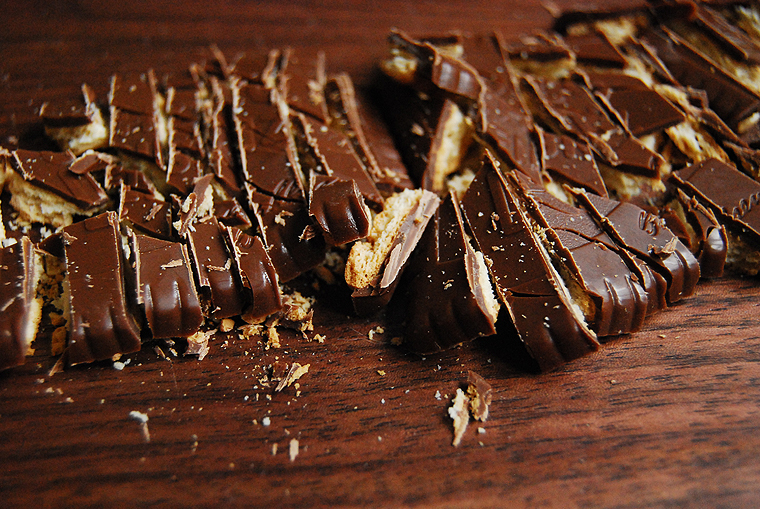
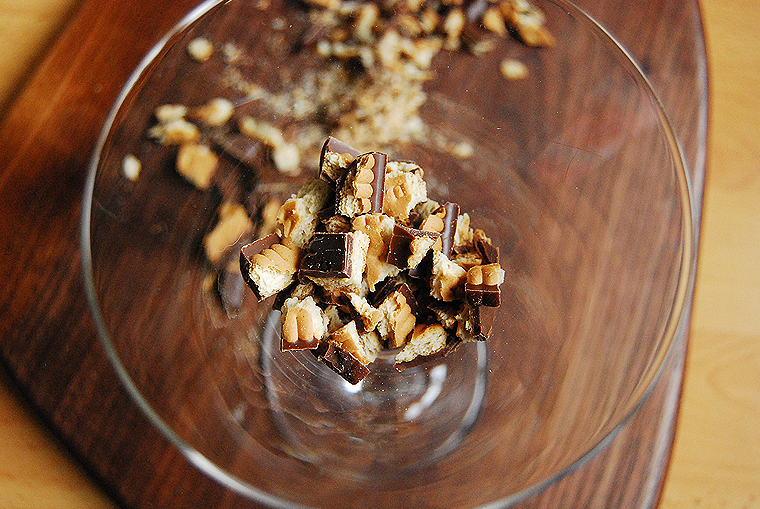
acookscanvas_chocolate pudding1_copyright2012-2013_2 copyWhy hadn’t I just baked a cake? Or a batch of his favorite cookies? Ideas started whirling through my mind. He loves chocolate pudding, which we have. We have the cookies and the marshmallows I’d just bought. Hmmm… I took the cookies covered on one side with chocolate and I chopped them up roughly. I mixed up the pudding according to the package directions, and  let that set up a bit in the fridge. I suddenly remembered that we had 2 jars of marshmallow fluff that we bought at a local shop during their annual “American Food” week.  During this magical week we can buy Campbell’s tomato soup, Hunt’s BBQ sauce, French’s mustard, and Marshmallow Fluff, along with peculiar “American” favorites like blueberry juice and boxes of donut mix. I grabbed a jar from the shelf and wondered if this would work better than shaping marshmallows.
acookscanvas_chocolate pudding2_copyright2012-2013_2 copy

acookscanvas_chocolate pudding3_copyright2012-2013_2 copy

acookscanvas_chocolate pudding4_copyright2012-2013_2 copy
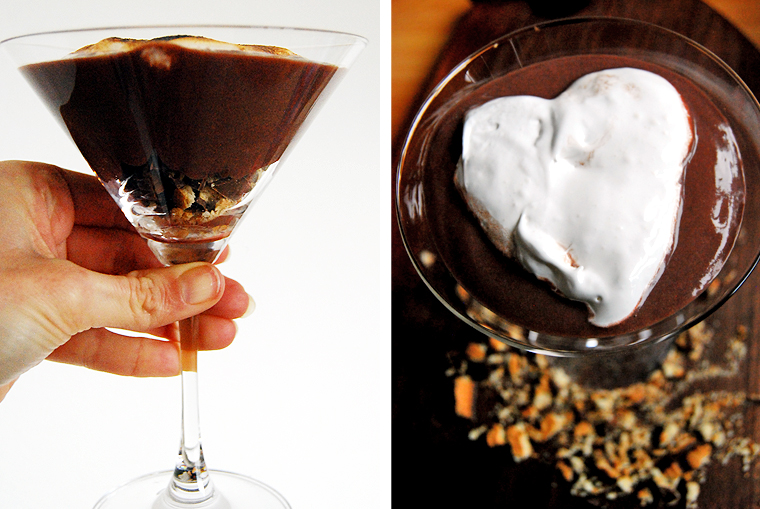
That evening, after we had dinner at a local wine and steak bar, we arrived home and I told him not to come into the kitchen, I needed 10 minutes to prep something special. As he waited patiently I grabbed a large martini glass, added a bit of the crushed cookies to the bottom, layered with chocolate pudding then carefully placed two spoonfuls of marshmallow fluff into a heart shape on top. I used my kitchen torch to toast the top of the marshmallow heart which gave off the unmistakable scent of roasting marshmallows around a summer campfire. From the next room he called out “What is that smell?!” I grabbed two small spoons and brought the s’more martini into the living room and he asked “Peewee! What did you make?!?” I told him the story I shared with you above and he loved it. The dessert was delicious and a hit!
acookscanvas_chocolate pudding6_copyright2012-2013_2 copy
S’more Dessert Martini
makes 4 servings

2 egg yolks
2 tablespoons of cornstarch
1/4 cup cocoa powder
2 1/4 cups of milk
1/2 cup sugar
1/8 teaspoon sea salt
1 teaspoon pure vanilla extract
1 jar of marshmallow fluff
1 box of cookies

Lightly beat the egg yolks in a bowl and set aside. In another bowl, mix the cornstarch and cocoa together. Add 1 cup of the milk and whisk until smooth. In a saucepan, pour the remaining milk, sugar, salt and mix. Bring to a boil while whisking continuously. Remove from heat and stir in the cornstarch and cocoa mixture using a whisk. Bring to a boil over medium heat and boil for 2 minutes stirring constantly, then remove from heat. Gradually whisk 1 cup of the chocolate sauce into the egg yolks. Pour the egg and chocolate mixture into the pan and stir while cooking over low heat for 2 minutes without boiling. Then remove from heat. Add the vanilla and place either in glasses or in a bowl and refrigerate for an hour.

To prepare the s’more dessert martini

Chop 2 cookies per serving and place into the bottom of each martini glass. Spoon two heaping spoonfuls of the chocolate pudding on top of the chopped cookies, top with two spoonfuls of marshmallow fluff in a V shape. Then, gently shaping the fluff into a shape of a heart. Lastly, toast the top of the marshmallow fluff with a kitchen torch to create the roasted marshmallow smell and flavor. Serve immediately.


Homemade Thin Crust Pizza Dough with Homemade Pizza Sauce

acookscanvas-pizza10-copyright2012-2013_2 copyA few months ago I was having trouble sleeping and for some reason I kept waking up at 4:35am. I didn’t even need to look at the clock to know, I already knew before looking that it was 4:35. What does that mean? It went away for a while but recently it has started up again, this time less precise and I wake up sometime between 3:00 and 4:00am. The house is totally dark and everyone is asleep though Jason is tossing and turning restlessly. One of our cats, Chewy, follows me around from room to room while our other cat Bella (who’s name long pre-dates the vampire novels) sleeps on top of her big stuffed elephant, one eye open, as she glares at me half asleep. I pace the house hoping I will get sleepy again. Outside the window the traffic light blinks yellow and there are no cars, buses, or trains in sight. Its cold, and so I crawl back into bed and lie there waiting to drift off to sleep.acookscanvas-pizza3-copyright2012-2013_2 copyThis morning, we braved the bitter cold, its -7C (19F), cloudy and windy. On days like this we want to stay in bed savoring the warmth, and leave the storm shutters drawn to block out the bleary grey light, and pull the covers back over our heads. Instead, we bundled up in layers, tied scarves around our necks and pulled on hats and gloves. We have two dutch bicycles. Have I mentioned them before? We don’t own a car here in Germany, whenever we travel we hop on our bicycles and pedal through rain or shine, snow, frost, and streets caked with ice. My bicycle has a wine crate mounted to the back (which my wonderful husband made for me) and this serves as my trunk. That’s where I stow my purse along with empty shopping bags. Every day I head to the grocery store, fill up my crate with whatever strikes me and pedal home to cook the foods you see here.acookscanvas-pizza7-copyright2012-2013_2 copyJason and I have a long-running cold-weather tradition; we like to make homemade pizzas together once or twice a week. Having lived in Chicago we have love Chicago style pizza, and no, not the deep-dish everyone assumes we are talking about.  We prefer the much more common thin-crust pie cut into party squares that is typical of south-side pizzerias   Over the past 4 years we have made countless pizzas, always adjusting our recipes to make them as close as possible to what we enjoyed back home.  Every time one comes out of the oven we try a slice and even though they are always delicious, we talk about next time adding a bit of this, changing a bit of that, and sometimes we come up with something that really hits close to home; “I think we are on to something!”, Jason says.acookscanvas-pizza1-copyright2012-2013_2 copy

acookscanvas-pizza2-copyright2012-2013_2 copyOne of the great things about making your own pizza is that it is a blank canvas waiting for flavors to be added. Meat or meatless, variety of cheeses, perfect vegetables and ripe fruit, delicious, tangy sauces and wonderful spices and nuts. You’ve just re-read the last sentence, haven’t you?  Let me paint you a picture to dress up a blank canvas for you. Imagine caramelized onions and apples on top of emmental cheese or a red grape pizza with slivers of prosciutto, parmesan cheese, and pine nuts? Or tandoori chicken with cilantro and red onions? You’re vegetarian? No problem! How about a shaved brussels sprout pizza with porcini mushrooms and red onions, all topped with freshly grated parmesan cheese, lightly drizzled with balsamic vinegar? Or, maybe new potatoes, roasted garlic, caramelized shallots with tarragon, topped with arugula and drizzled with olive oil. One of our favorite pizzas in Chicago had pepperoni, crushed garlic, and pineapple which we would order from a little pizzaria called Tomato Head. And my husband’s favorite is pepperoni pizza from Aurelio’s. Once we made a caramelized red onion and home-made Italian sausage pizza, which was fantastic.  We try, with varying success, at re-creating these pizzas, and no matter how it turns out we always enjoy trying new things.  Substitute pesto or alfredo for marinara. Maybe toss some feta cheese in with the mozzerella. You can try anything.acookscanvas-pizza4-copyright2012-2013_2 copy

acookscanvas-pizza6-copyright2012-2013_2 copyMy dough recipe makes enough after rising for two large thin-crust pizzas but feel free to adjust it to your liking. If you like thicker crust, don’t roll it out so thin but if you do like thin crust, this one is almost cracker-like when rolled out. We tend to have left-overs but in a few days it’s all gone and soon we start wanting more. Fortunately, the crust doesn’t take too long to make. Another plus is that it doesn’t necessarily need time to rise. After mixing all the ingredients together for the dough, simply add a little flour to your counter and place it on the work surface, then start rolling it out. I however, like to let mine rise for at least two hours, to develop some elasticity.

We don’t usually use prepared pizza sauce from a can, at least not without at least doctoring it up with some fresh herbs and olive oil.  Instead we usually make our own sauce starting with canned tomato puree and canned whole or diced tomatoes. There’s something satisfying about making your own sauce, it can be spicy, tart, or sweet as we like it; and lightly seasoned with onion and garlic to very herbal, with lots of fennel, basil, and oregano.  Add a whatever seasonings appeal to you, our recipe is easy and fool-proof.  acookscanvas-pizza5-copyright2012-2013_2 copy

acookscanvas-pizza8-copyright2012-2013_2 copyEven though I love to work in the kitchen when the house is quiet and I’m all alone to brainstorm new recipes and play with my food there is one thing I look forward to everyday. At 6:30 every evening there is a light tap on our storm shutters, ‘shave and a hair-cut’, to which I tap back ‘two-bits’ and go to the front door to hit the lock buzzer and there he is arriving home after a day’s work. He gives me a kiss, drops his bag next to the computer, kicks off his shoes off, hangs up his coat with one hand, the other receiving a dirty martini I shook up just a minute before he tapped on the window. I unwrap the already risen dough from the window and meet him in the kitchen, where he is already stirring up a pot of sauce and letting go of the day’s stress. Our kitchen is quite small but it is ours and we love it. Having lived here for a few years we have choreographed our little “dance” routine around the kitchen that is necessary when we cook together. I glide behind him to the sink while he walks in a half circle around me to get to the stove, sometimes gently bumping into one another while meeting up at our small counter to chop and dice the ingredients. We always have fun but the dance of the pizza is the most fun. Even though it’s tiny, I wouldn’t change it, it’s perfect the way it is and the way we are together. I hope you try this recipe and perhaps it will become a part of your family dinner tradition as well.acookscanvas-pizza9-copyright2012-2013_2 copy

Homemade Pizza Dough
makes two large thin crust pizzas

2 1/2 cups all purpose flour
2 teaspoons active dry yeast
1 teaspoon salt
2 teaspoons honey
2 tablespoons olive oil
1 cup warm water (35-37c or 95f-98f)

*Herb pizza crust can be made simply by adding some of your favorite spices. We tend to use dried oregano, fennel and garlic powder (as seen in the images above).

Homemade Pizza Sauce
makes enough for three large pizzas

1 14 1/2 oz can crushed tomatoes
1 14 1/2 oz can tomato puree
1/2 teaspoon salt
1/2 tablespoons sugar
1 teaspoon dried oregano
1/2 teaspoon freshly ground pepper
1 teaspoon fennel
1/4 teaspoon garlic powder
olive oil for drizzling
cornmeal

Add all ingredients to a large saucepan and bring to a simmer. Simmer for 30 minutes stirring often to prevent sticking from the sugar and tomatoes. Once sauce is done allow it to cool before placing on your pizza dough.

Preheat the oven to 500°F / 250°C (on convection fan setting)

Mix warm water with the yeast and honey and let it sit for 10-15 minutes until the mixture becomes frothy and has a nice foam on top. After the yeast has matured add the salt, olive oil and any spices you are using then mix. Add the flour to the liquid mixture and blend start in the middle and working your way out till the bowl is clean and you are left with a pizza dough ball in the middle. Either turn the dough out immediately on a flour surface and roll out thin or if you are letting it rise, cover the dough with plastic wrap and allow it to rise for at least two hours in a warm area.

When the dough is ready, punch it down and knead it on a flour surface for a minute or so. Dough will be a bit sticky so make sure you sprinkle flour on top of the dough before kneading. Roll your dough into a log and cut it in half for two pizzas. Whether you’re using a pizza stone or baking sheet prepare either at this point. I use a large baking sheet and place the pizza on baking paper. Roll out the pizza dough as thin as possible. Brush the side with olive oil and gently sprinkle with cornmeal (this is a Chicago staple when it comes to pizza). Place the baking paper on top of the oiled side and gently wrapping the pizza dough off the flour surface flipping the dough till it’s on top of the baking paper. Place on your baking sheet. Spread the base with tomato sauce, add your toppings, and sprinkle with cheese of your choice.

Bake in the oven for about 10-15 minutes until cheese turns golden and crust becomes crisp.

*Our pizza as shown: Pepperoni (that we smuggled back from the States), diced onion and mushrooms with shredded and fresh mozzarella cheeses sprinkled with oregano.