Beouf Bourguignon

acookscanvas_rachelkhoo_beouf_bourguignon4_copyright2012-2013If you love beef stew, you will love this classic French version, called boeuf bourguignon. Although putting boeuf bourguignon in the same category with common beef stew just doesn’t seem right. The first time I tasted this dish was in Paris, on our 9th wedding anniversary, sitting at a small restaurant near the banks of the Seine. The quaint little old place was made all the more cozy by the fact that it was raining heavily outside. After only a few moments spent looking over the menu I knew that I would finally get to try a true boeuf bourguignon.

The weather in southern Germany during the month of October brings the beginning of the grey season that inevitably lasts until April. Hearty stews are perfect for this time of year, served with a crusty baguette spread with fleur de sel beurre; an artisinal French sea-salted butter. While my favorite version of boeuf bourguignon is Julia Child’s from Mastering the Art of French Cooking, I was drawn to Rachel Khoo’s lovely cookbook, The Little Paris Kitchen, where she combines the bread into the stew as baguette dumplings. The dumplings are made using a stale, 2- or 3 day old baguette, with fresh herbs and milk before frying them in a pan with plenty of butter. To me, this sounded even better than the traditional classic which is often served alongside boiled or mashed potatoes.
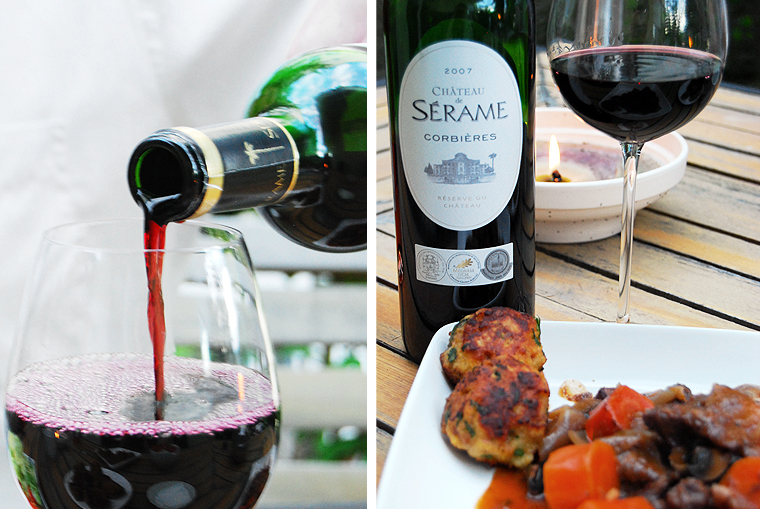
acookscanvas_rachelkhoo_beouf_bourguignon2_copyright2012-2013The ingredients for boeuf bourguignon don’t differ that much from a typical beef stew, but features the addition of a dry red wine. As the most predominant flavor in this dish, you should choose a good quality, rich, ruby-red wine that you would like to drink. I often choose a Corbières, Bordeux, or a Côtes-du-Rhône. You can find inexpensive bottles of these varieties and you may want to pick up an additional bottle as they pair very nicely with the meal.

There is no need to worry about peeling a dozen baby onions either. You can simply bring a pot of water to a boil, blanch them for 5 minutes, drain, and when they are cool enough to handle, peel off the skins and trim their root. I often throw in double of what the recipe calls for. The caramelized onions and sauteed mushrooms are delicious with the gravy from this stew.
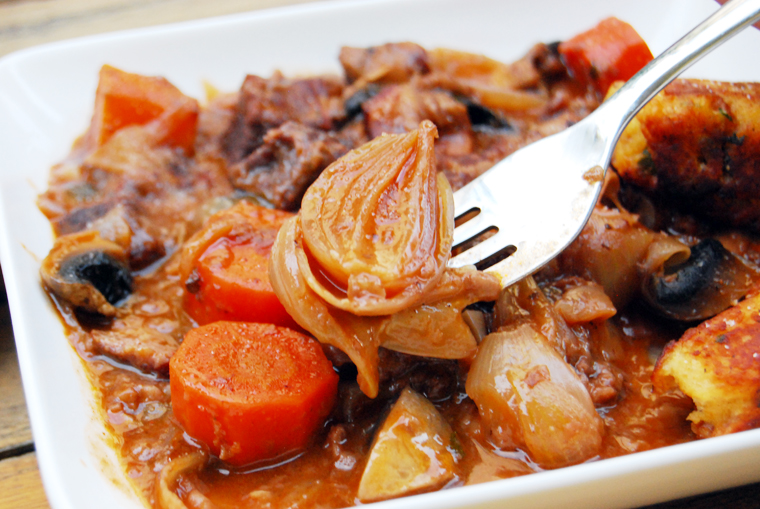
acookscanvas_rachelkhoo_beouf_bourguignon3_copyright2012-2013As for the dumplings, they are very simple to make. The hardest part for us is letting a baguette sit around a few days in order for it to go stale. I venture out almost every day to buy bread. No, we don’t go through that much, and honestly, we tend to waste a lot of bread because there are so many varieties here, and I want to try them all! Our favorite bakery has the most delicious stone-oven baguette. If you arrive there during the time they are baking, you may be one of the fortunate few to walk out with a hot, crispy, freshly baked baguette. Jason and I usually can’t resist breaking off an end to share before we even make it to the corner from the bakery. The crusty ends are our favorite part. When I saw her recipe included baguette dumplings, I knew exactly where to go for the perfect baguette. I bought two of them, knowing I wouldn’t be able to control myself all the way back home. Her recipe calls for 200 grams, which is a normal size baguette in the States. It is important to note: the bread must be stale in order for the bread to absorb the milk.
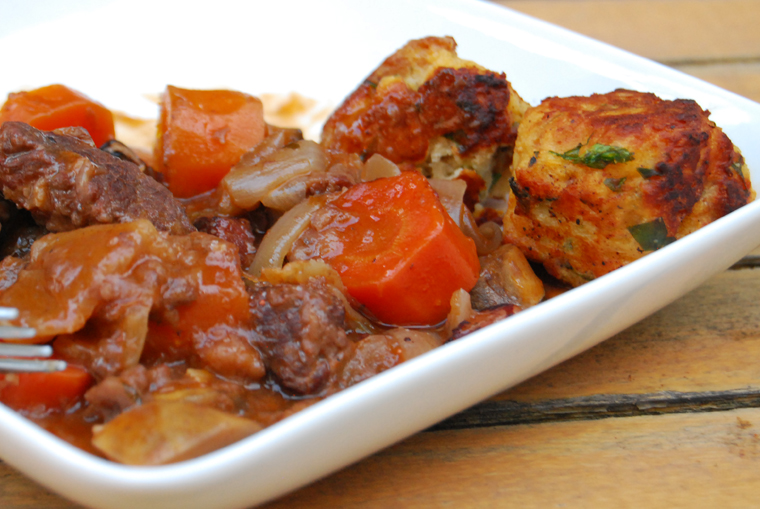
acookscanvas_rachelkhoo_beouf_bourguignon1_copyright2012-2013The boeuf bourguignon was delicious. I’ve made this dish previously from a couple different recipes and found this one to be a simpler version that matches even the complicated classic recipes in flavor. One very important step you should never skip is you must always brown the meat. Some recipes say you can skip this, but I disagree. You need to brown your meat to add depth and flavor to the sauce. Also, no need in flouring your meat in batches before browning it. I’ve learned in Joel Robuchon’s, The Complete Robouchon that after you brown the meat on all sides (roughly 5 minutes) in a butter/oil mixture over medium heat, sprinkle the cooked meat with flour and throw it back in the pan, stirring constantly for 5 minutes, just long enough to remove the flour’s raw taste, which works perfectly.  The baguette dumplings were delicious and an excellent way to soak up all of that delicious sauce. This recipe is definitely a keeper!

Boeuf Bourguignon
Adapted from Julia Child’s Mastering the Art of French Cooking in combination with The Little Paris Kitchen by Rachel Khoo

Ingredients
900 grams (2lbs) of stewing beef, cut in large chunks
1 T. olive or vegetable oil for browning the beef
2 T. plain flour
150 grams (6 oz.) lardons or bacon
small bag of pearl onions (15-20 in bag)
3 cloves of garlic
2 bay leafs
1 bunch of fresh parsley
1 spring of thyme (or 1 tsp dried thyme)
500 ml (2 cups) of red wine
300 ml (1 1/4 cups) of water
2 T. tomato paste
12-15 button mushrooms (quartered)
freshly ground pepper and salt to taste

Directions
Preheat the oven to 150° C (300°F)

Heat the oil in a large, oven-proof casserole pan over high heat and sear the meat in batches until they are well browned on all sides. Set aside on a plate.

In the same pan, cook the lardons (bacon) until they are brown and crispy. Add the onions and garlic and cook til lightly golden browned. Add ground pepper. Return the meat and any juices to the pan. Sprinkle the flour over the mixture and cook 5 minutes to remove the raw flour taste. Add the bay leaf, parsley, thyme and cook for a few minutes. Pour in the wine, water and stir in the tomato paste. Bring everything to a simmer. Cover the pan with a lid and place the pan in the over for about 3 hrs or until meat is tender.

About 20 minutes before serving, add the quartered mushrooms to the stew. Remove the bay leaf, parsley bunch, and thyme springs. Taste for seasoning. Garnish the stew with chopped flat-leaf parsley and serve with Baguette Dumplings or boiled/mashed potatoes.

Baguette Dumplings
Adapted from The Little Paris Kitchen by Rachel Khoo

Ingredients
200 grams (1 normal size) stale baguette
250 ml (1 cup) milk
a pinch of nutmeg
salt and pepper
a handful of flat-leaf parsley, finely chopped
1 egg
1-2 T. plain flour
butter for frying

Directions
Cut the baguette into small cubes and place them in a medium bowl. Bring the milk to a boil and pour over the bread. Stir the bread mixture to make sure the milk is absorbed evenly, cover and let it sit for 15 minutes. Season with freshly ground nutmeg, salt and pepper. Stir. Add the parsley, egg and sprinkle the flour over the mixture. Wet your hand and mix everything together. If the mixture is too wet (should only be slightly sticky) add a bit more flour.

To cook the baguette dumplings, melt butter in a non-stick frying pan over medium heat. Cook the dumplings until they are golden and crispy on all sides.

Garnish the stew with freshly chopped parsley and serve with the dumplings.

Pear Clafoutis

acookscanvas_ina_garten_pear_clafoutis_copyright2012-2013I’m a sucker for fruit desserts. Truth be told, I usually reach for these desserts before chocolate. I know, I know… I’m crazy, aren’t I? There’s something about the sugary, caramelized, fruit that has me wanting another bite. No matter whether its freshly baked banana or blueberry muffins, or any variation of fruit tart, I’m there, waiting anxiously to pull them from the oven only to sit there on the floor in front of the hot oven and dig into the first one. Don’t tell me you haven’t done this before, we all have.

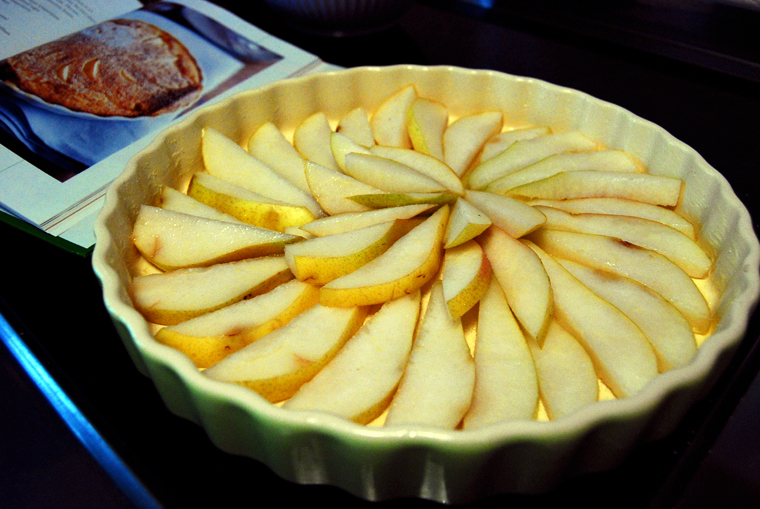
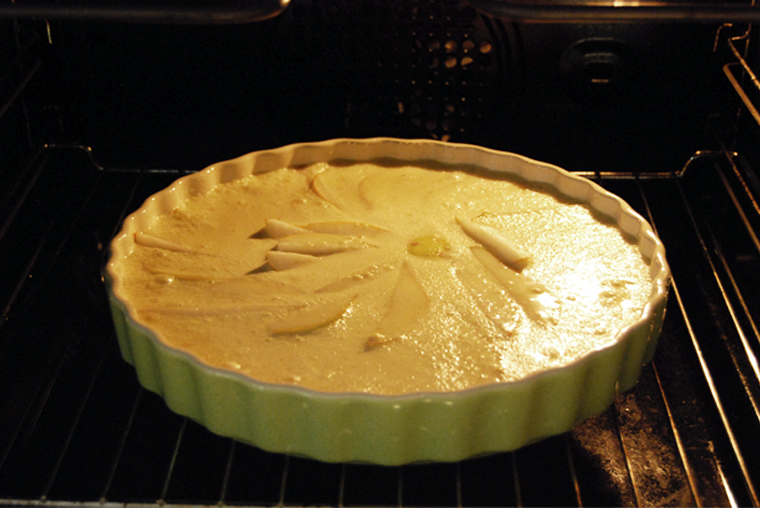
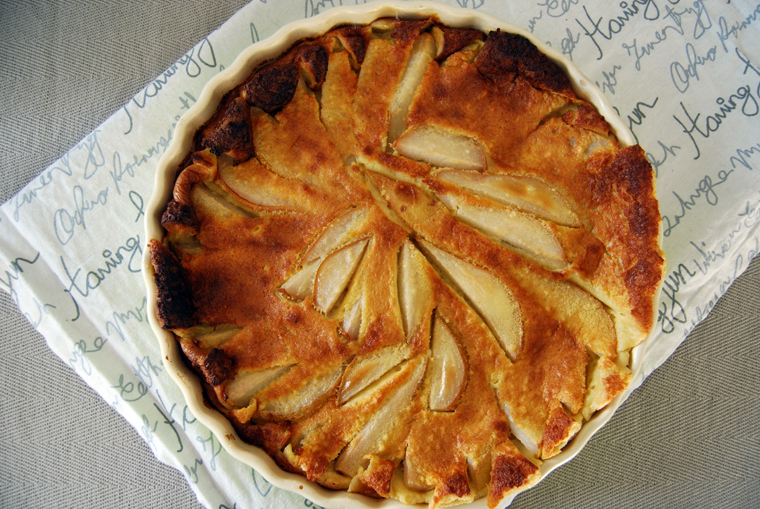
acookscanvas_ina_garten_pear_clafoutis2_copyright2012-2013This pear clafoutis recipe, also known as a clafouti aux poires, is a variation on the traditional puffed French custard cake. Traditionally, a clafoutis is made with cherries but over the years many adaptions have been made. The puffed part of the cake is when the pancake-like batter puffs up in the oven, almost like a soufflé, and when it’s removed from the oven it will slowly sink back down. If this happens, don’t worry, you did it correctly.

acookscanvas_ina_garten_pear_clafoutis3_copyright2012-2013According to Larousse Gastronomique, this dessert originated in the Limoges region of France, consisted of black cherries, and was arranged in a buttered dish and covered with a fairly thick batter. The cherries aren’t traditionally pitted, but simply washed. It’s been said that the pits add their own flavor to the batter during cooking. This tart is served warm and dusted with powdered sugar. The Académie française, which defines the clafoutis as a “sort of fruit flan”, were faced with protest from the inhabitants of Limoges and changed their definition to a “cake with black cherries” Nevertheless, there are numerous variations using red cherries and/or other fruits. The word clafoutis come from the provincial dialect word clafir (to fill).

acookscanvas_ina_garten_pear_clafoutis4_copyright2012-2013I found this recipe in Ina Garten’s Barefoot in Paris cookbook. I love and highly recommend this book. All of the recipes I’ve made have turned out perfectly. I added a touch of freshly grated nutmeg to the clafoutis and found the nutmeg complimented the pears nicely.
acookscanvas_ina_garten_pear_clafoutis5_copyright2012-2013

Pear Clafoutis
Adapted from Ina Garten, Barefoot in Paris

Ingredients
1 tablespoon (15 grams) unsalted butter, at room temperture
1/3 cup plus, 1 tablespoon (70 grams plus 15 grams) granulated sugar
3 large eggs, at room temperature
6 tablespoons (60 grams) all-purpose flour
1 1/2 cups (360 ml) heavy cream
2 teaspoons (10 ml) pure vanilla extract
1/4 teaspoon (2 grams) kosher salt
2 tablespoons (30 ml) of brandy
2-3 firm but ripe pears (Bosc or Bartlett would be perfect. I used Bosc.)
Freshly ground nutmeg
Confectioner’s sugar

Directions
Preheat oven to 375°F/190°C

Butter a 10 x 1 1/2 inch round baking dish or tart pan and sprinkle the bottom and sides with 1 tablespoon of granulated sugar. Set aside.

Beat the eggs and 1/3 cup of granulated sugar in the bowl with a spoon or mixer until you have reached a light and fluffy mixture. Add the flour, cream, vanilla extract, salt and brandy and mix til just blended. Set aside.

Meanwhile, peel, quarter, core and slice the pears. Arrange the slices in a single layer, slightly fanned out, in the baking dish. Pour the batter over the pears and add a little,  freshly grated nutmeg over the top. Bake until the top is golden brown and the custard is firm, roughly 35-40 minutes. Serve warm or at room temperature, sprinkled with confectioner’s sugar.

*Sources
Larousse Gastronomique
Ina Garten Barefoot in Paris

Casseroled Artichokes from Larousse Gastronomique

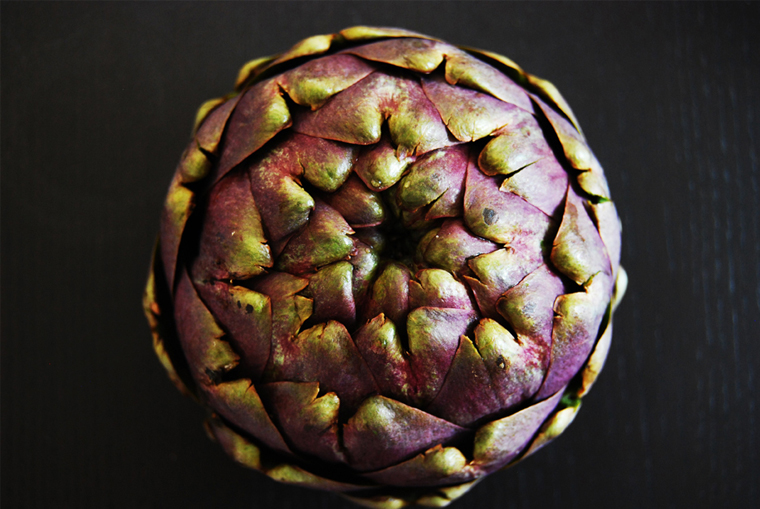
acookscanvas_artichokes0_copyright2012-2013 copyIn the States artichokes are usually in season around springtime, and here in central Europe you can find them in the spring and autumn. After having lunch today with Jason, I saw a large bushel of artichokes for 2€ each, across the street at a small farmer’s market/store where you can find the farmer herself selling everything from her farm along with bottles of local wine from the producers in our village.

acookscanvas_artichokes2_copyright2012-2013I’ve been thinking about trying artichokes for quite some. For my birthday last year, Jason bought me several French cookbooks. I found them intimidating, but fascinating. They included The French Laundry by Thomas Keller, Larousse Gastronomique, The Complete Robuchon by Joël Robuchon, Mastering the Art of French Cooking  and The Way to Cook by Julia Child.

acookscanvas_artichokes3_copyright2012-2013The French Laundry is filled with magnificent recipes and images of Thomas Keller, his restaurant and his chefs working in his kitchen. Thomas Keller has won many awards including the James Beard Foundation award and the Best California Chef in 1996, and was named the Best Chef in America in 1997. He is the only American chef to receive simultaneous three star Michelin ratings in two of his restaurants.
Joël Robuchon is legendary, a masterful and innovative chef. In 1989 he was named “Chef of the Century” by the guide Gault Millau and has received 28 Michelin Guide stars – the most of any chef in the world.

Larousse Gastronomique is the World’s Greatest Culinary Encyclopedia. You will find the majority of this book is about French cuisine and contains recipes for French dishes and cooking techniques. The first edition came out in 1938 and has been in updated yearlt, and in print continuously ever since.

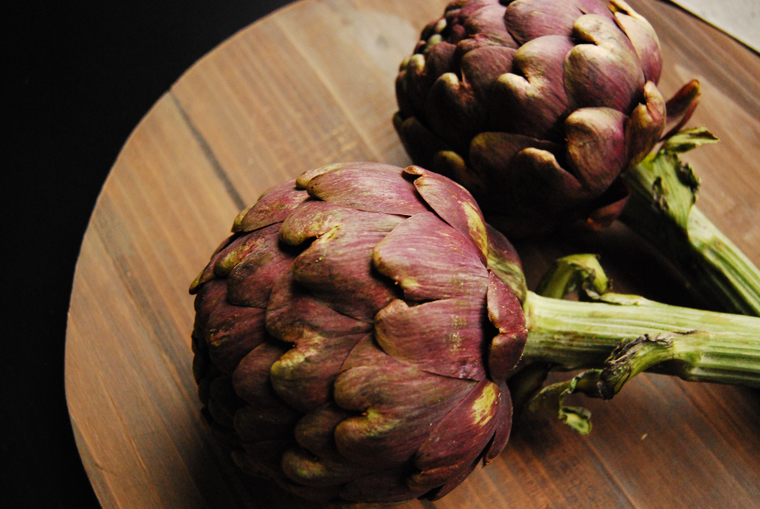
acookscanvas_artichokes3_4_copyright2012-2013Can you see why I was so intimidated? I’ve cooked several recipes from these books, I love them and I’m learning a lot, but there is so much information, so many techniques to learn. I want to learn the right way to do things, from those who do it best. This was one of the reason I wanted to start a blog, to document my progress as I learn from these books. So today, with the artichokes in my bike basket, I came home and picked up Larousse Gastronomique. I will be making casseroled artichokes. It is recommended that you use small Italian or violet de Provence (a purple artichoke from Provence, France) but I’m sure any artichoke will do.
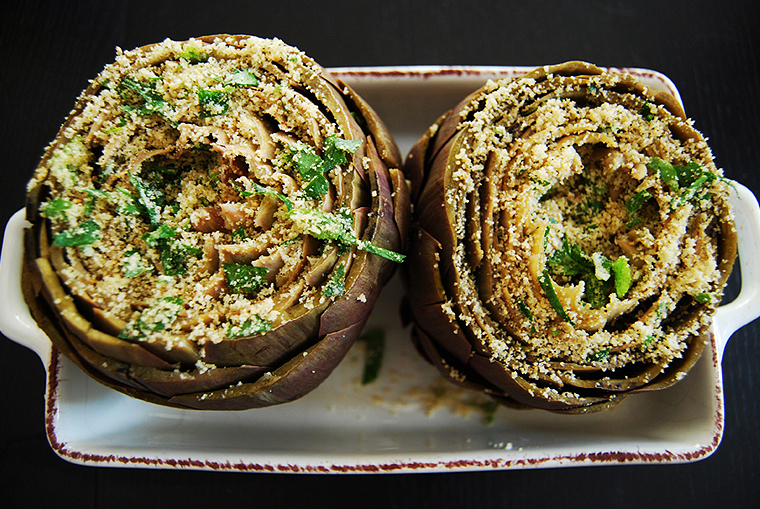

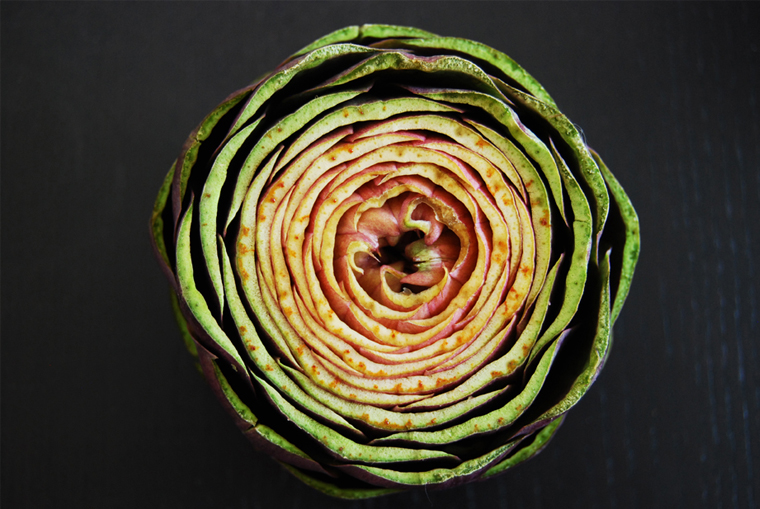
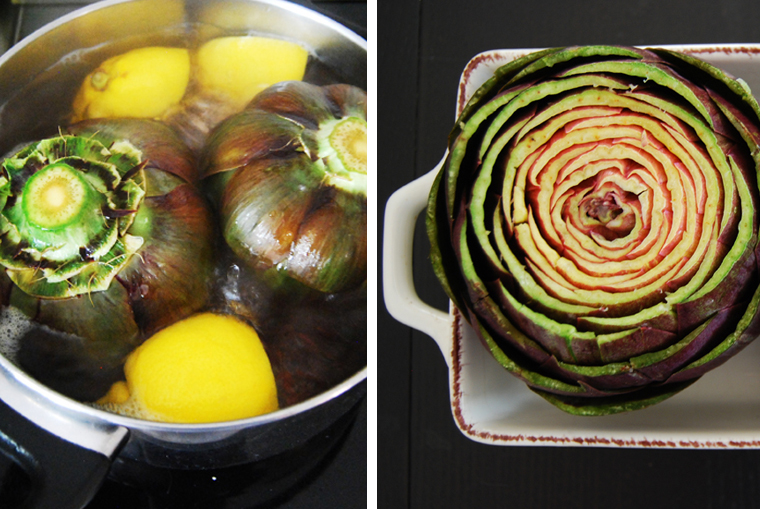
Some people may find these a little difficult to prep and eat. You may be wondering, what part are you suppose to eat and how do you eat it? First, prepping these artichokes is just as easy as they are to eat. First, you prepare the artichokes by trimming the stalk, snipping the thorns and leaves off to two-thirds of their length, and slicing an inch of the top off revealing the layers. So far so good? Great! Let’s move on… Boil them in a large pot with 2 halved lemons for 20 minutes, stuff with the bread crumb mixture, and bake according to the recipe. After baking, you can dig in immediately; simply pull a leaf off, scraping the lower-inside bit at the base of the leaf between your teeth, and enjoy. Do not pop the whole leaf in your mouth. Set an empty bowl on the table to collect the eaten leaves. You may be thinking (especially if this was your first time preparing these) the artichokes seem like a lot of work, but I promise you, the artichoke saves the best for last; as you get closer to the center, the more edible the leaves become, until you have finally reached the gem. The heart of the artichoke. The most delicious part!

acookscanvas_artichokes5_copyright2012-2013
Casseroled rtichokes
From Larousse Gastronomique

Ingrediants
2 artichokes
2 lemons, sliced in half
1/2 cup bread crumbs
1/2 small jar of capers, roughly chopped (about 2-3 tablespoons, depending on how much you like them)
2 cloves garlic, finely diced
4 sprigs of fresh parsley, finely chopped
sea salt and freshly ground pepper
olive oil

Preparation
I prepared the artichokes by cutting the stalk,  snipping the thorns and leaves to two-thirds of their length, and slicing an inch of the top off where you can see the layers throughout the artichoke.

Directions
Slice two lemons in half and place in the a pot and blanche the artichokes in boiling water. Drain, remove the center leaves, and the choke. Combine breadcrumbs, chopped garlic, capers, fresh parsley, sea salt and pepper and fill the artichokes.  Arrange the artichokes close together in a casserole, moisten with a generous quantity of olive oil and season with salt and pepper.

Cook in a preheated oven at 180°C/350°F, uncovered, for about 50 minutes, basting from time to time.  Arrange the artichokes on a dish and pour the cooking juices over them. Serve immediately.

Croque Monsieur

acookscanvas_croquemonsieur1_copyright2012-2013 copy copyA croque-monsieur (or a Mister Crunchy!) is a delicious french baked ham and Gruyère sandwich topped with more Gruyère and broiled to crispy, bubbly perfection. I remember the first time I had one, it was three years ago in Paris. After reading many recipes on how to make them and what they’re suppose to look like, I was in search for an authentic example for our first lunch. We were staying in the 6th arrondissement, near the Notre Dame.  Down the street from us, right next to the Seine was a restaurant that looked promising and they had croque monsieur on the menu. Excited to finally try it, I waited anxiously while enjoying a glass of red table wine.  When our meal came to us, it wasn’t what I was expecting, it wasn’t quite right. I’ve seen croque-monsieurs made with slices of oval-shaped hand made peasant bread. This one looked as though they took two pieces of Wonder bread, slapped them together and covered with shredded cheese. A little fast foodish per se. A little disappointing but it tasted good.  Could it be that sitting on a Paris sidewalk, people watching while enjoying French food with a view of the Notre Dame have anything to do with it?  I’m guessing if I was just served the worst microwaved sandwich, I could still enjoy it with the Parisian ambiance surrounding us.
acookscanvas_croquemonsieur4_copyright2012-2013 copy copy
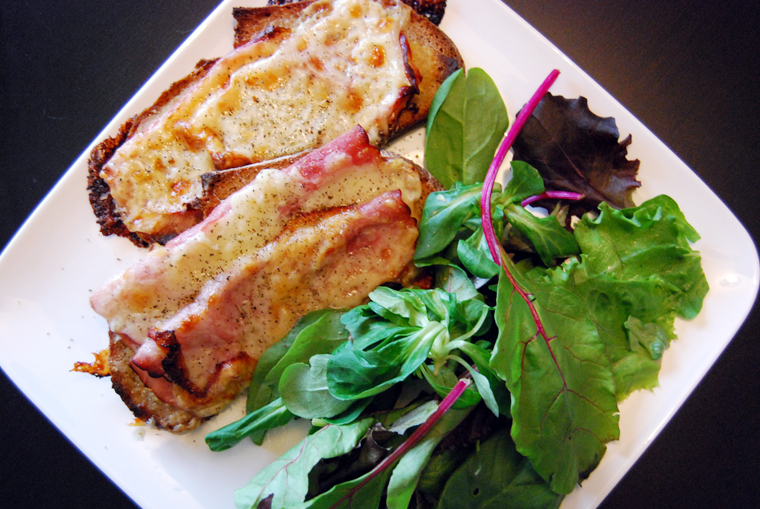
We later headed towards the 2nd arrondissement and after much walking and lots of sight-seeing, we were hungry! We saw a restaurant that looked promising. Again, croque monsieur was on the menu and we ordered two with a side salad and a carafe of red wine. Our waiter was very nice and brought us a little bowl with bright red, extremely thin shavings of something. We couldn’t figure out what it was, but it was delicious.  A little bit sweet, nutty, and salty, but unlike anything we’d ever tasted. We finally asked the waiter and he told us that they were thinly shaved beets that he had just deep fried for us. Delicious! A few minutes later our croque monsieurs arrived, and these looked like proper croques, like the ones I’d seen in my cookbooks.  They were very tasty indeed and perfect for a late lunch.

acookscanvas_croquemonsieur2_copyright2012-2013 copy copy
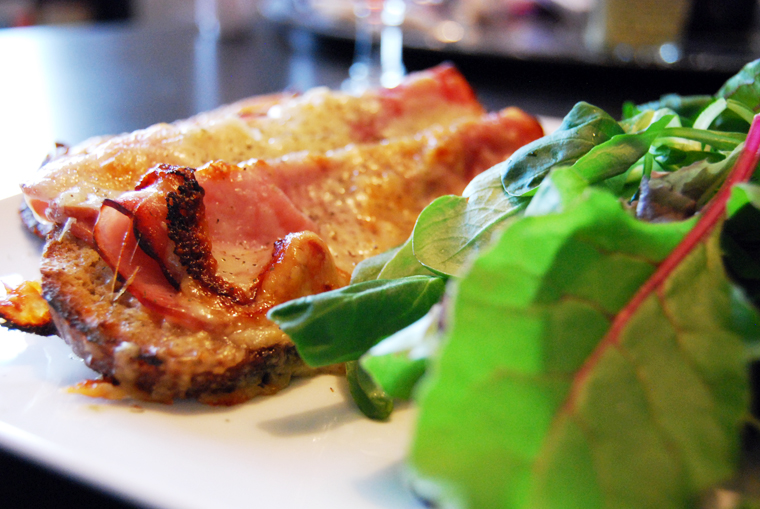
Larousse describes a Croque Monsieur as a hot sandwich made with two slices of buttered bread, crusts removed, filled with thin slices of Gruyère cheese and a thick slice of lean ham. The Croque Monsieur is lightly browned on both sides, either in a buttered skillet or under the broiler. The top is then covered with a Mornay sauce (Béchamel with gruyère or any other swiss added) and broiled until lightly browned. After doing some reading, I’ve learned that there are several possible variations on the basic croque monsieur recipe. They can include chicken breast, cod filet, gouda cheese, tomatoes, and even pineapple, but I think I’ll stick to the classic. If the croque monsieur is served with an egg on top, it is then called a croque-madame. This dish is still popular in cafes and snack bars and are even better paired with a nice crisp salad and a glass of red wine.

Croque Monsieur
This recipe makes 4 sandwiches

Ingredients
for the sandwiches:
1 loaf of peasant bread, sliced (sourdough is perfect)
14 ounces of  ham, slices
10 ounces of gruyère, sliced thinly
for the Mornay sauce:
2 1/2 cups of milk
3 tablespoons of butter
3 tablespoons of plain flour
4 ounces of emmenthaler, grated finely
1 bay leaf
freshly ground pepper
Directions
Preheat your oven to 350°.Warm the milk with the bay leaf in a saute pan. Do not bring it to a boil.  When the milk is warm, let it stand for 15 minutes so the flavor of the bay leaf steeps with the milk. Pour the milk in a bowl and set aside. Rinse out the pan. Return to the heat and melt the butter over low heat. When butter has melted, add the flour and stir quickly until the flour and butter become a ball and cook for a minute. This is the starter to your roux. Remove the pan off the stove and slowly pour in the milk and whisk quickly. You must make sure the milk is combined with the roux. Return your roux to the heat, stirring constantly. If you don’t the mixture could burn or stick. Keep mixing until the roux thickens and becomes smooth and shiny. Add the finely grated cheese. Stir til melted then set aside.

Lightly butter the outside of your bread. Place your buttered bread on a baking sheet lined with baking paper. Assemble your sandwiches with slices of the bread, ham and cheese. Add a little freshly ground pepper on top. Spoon your Mornay sauce over the sandwiches and place them in the oven. Cook until the Mornay is bubbling and your cheese is melted.

Quiche Alsacienne with Fennel Arugula Salad

acookscanvas_strasbourg1_copyright2012-2013While living in Europe for almost four years, we’ve grown quite fond of cheese and bread. Sometimes, it’s all we have for dinner, with a nice bottle of wine of course. A nice steinofen baguette (stone oven baguette), a bottle of Corbières, and a variety of cheeses, such as brie and camembert. On August 3 we celebrated our eleventh wedding anniversary in Strasbourg France. My husband Jason planned the whole trip as a surprise. He entered the address into the GPS and I was instructed to follow the directions. When we crossed the French border, I started to get excited. I had been hoping our destination was in France but he was trying to mislead me by telling me we may be meeting another form of transportation; ferry, airplane, train, etc. When we arrived, in Strasbourg, I was thrilled!
acookscanvas_strasbourg2_copyright2012-2013We unloaded the car, went to our apartment to drop everything off and then Jason said, “I think we should go across the street to the grocery store and pick up a few things”. I can spend all day in any grocery store but a French one… look out! We walked in and the first thing we saw was an array of baguettes. Warm, soft yet crunchy, we couldn’t help picking out a few. Next, we headed for the cheese department, which is easy to find if you follow your nose, and picked out a camembert and a brie. Then, we were off to the wine & champagne section. Where we picked up a few bottles of wine and a bottle of champagne from Champagne. We headed back to the apartment where he wouldn’t let me help prepare anything, he told me to go out on the balcony and relax. He made us a nice spread of sliced baguette, sea-salted butter, and cheese, and we popped the cork. We toasted to our eleven years.
acookscanvas_strasbourg3_copyright2012-2013

After we took our time and enjoyed the ambiance from the balcony, we decided to venture out and explore the town. A new place for both of us with no plan in place other than to take in the scenery of old cobblestone streets that are typical of many small towns and villages through Europe. After passing the town church, which is more of a tremendously massive Gothic cathedral, we walked down a side street and wandered upon a bistro/tea room called La Part Thé. This little cafe had baguettes, eclairs, tarts, macarons, croissants, kugelhopf, tarte flambée (flammkuchen), and quiche. The only menu available was written on a chalk board outside.  Being close to Lorraine, we had to try their quiche alsacienne, a bacon, onion, and gruyère flavored local specialty. Jason thought the salad was delicious and we immediately started naming flavors we could identify so we could later try to re-create it at home.  It was a complex yet subtle walnut vinaigrette, the best we’d ever tasted.  The quiche was delivered to us a few moments later…. oh, the quiche! The quiche was perfect – a lovely, buttery, and flaky crust, rich and smooth egg  custard that had just the right amount of bacon and onion. If only I could begin every day with one of these.
acookscanvas_strasbourg4_copyright2012-2013Today I decided what better time to pull out Joël Robuchon’s The Complete Joël Robuchon and make his quiche aux oeufs et lardons (egg and bacon quiche, aka quiche lorraine).  Although, I’ll be adding onions to the recipe, which will make it a quiche alsacienne. According to Joël Robuchon, the French took the word  quiche from the German word for cake, kuchen. Quiche is a traditional specialty of Lorraine, the eastern region closest to Germany, which was served on the holiday tables of the dukes of Lorraine, in their capital city of Nancy, as early as the 16th century. During that time, the crust was made of bread, not pastry. Quiche Lorraine does not contain gruyère or any cheese for that matter. Gruyère is a Parisian addition, not a tradition.

I apologize for the poor Instagram photo… a better image will be coming soon.quiche lorraine

Quiche Alsacienne
adapted from The Complete Joël Robuchon by Joël Robuchon’s

for the crust: pâte brisée
this makes a 400 gram pie crust (25 cm/10-inchtart for the quiche

Ingredients
250 grams (2 cups) sifted flour
5 grams (3/4 teaspoon) salt
1 egg yolk
115 grams (8 tablespoon) butter, diced and at room temperature
74 milliliters of water (5 tablespoons)

Directions
Place the flour in a large bowl. Make a well and add the salt, yolk, and butter. Mix gently with a wooden spoon until the dough holds together. Add the water and keep mixing til the dough becomes a smooth ball. Work as quickly as possible  before the dough becomes tough. Flatten the dough, using the palm of your hands and then wrap the dough in plastic wrap. Refrigerate for at least an hour or overnight before using. After the hour is up, flour your work surface and your rolling pin. Roll out the dough to a thickness of 3mm
(1/8 inch). Lay the dough in the tart pan, fit it in, and cut off any dough hanging off the edges.  Refrigerate while you prepare the filling

for the filling

Ingredients
3 eggs plus 2 yolks
250 ml (1 cup) milk
250 ml (1 cup) whipping (heavy) cream
1 medium yellow onion
200 grams (8 ounces) smoked lardons or thick bacon slab cut in small chunks
dash of cayenne pepper, sea salt, white pepper, and nutmeg
butter for sautéing
flour for dusting

Directions
Preheat the oven to 220°C/425°F

Whisk together the eggs and yolks. Add the milk, the cream, a dash of Cayenne pepper, a pinch of salt and grated nutmeg, then whisk.  Preheat a skillet over low heat and add a little butter. Cook the lardons (note: if using bacon, butter is not necessary) for 3 minutes while stirring. Drain the lardons on paper towels.

Remove the dough-lined tart from the refrigerator. Put the lardons in the dish and pour the egg mixture on top. Bake for 5 minutes, then lower the heat to 180°C/350°F and cook for about 25 minutes more or until the quiche has become golden brown.

Arugula & Fennel Salad

Ingredients
1 bulb of fennel
1 bag or bunch of arugula
1 lemon
scallions
extra virgin olive oil
sea salt and freshly ground pepper

Directions
Trim the fennel bulb. Cut the stalks and the bulb in half. Remove the tough inner core. Using a sharp knife, cut the fennel into very thin slices and put them into a large bowl. Add the arugula. Drizzle with olive oil and lemon juice, season it with salt and pepper, and toss it again to coat all the ingredients. Immediately plate.

The Cook’s Atelier


www.thecooksatelier.com

This Mother/Daughter team moved from Phoenix, Arizona to Beaune, France over ten years ago.  They founded The Cook’s Atelier with the intention of creating a special place that supports the connection between the farmer and the cook. Where people from all over the world could come together, learn to cook and have a good time. They are inspired by farmer’s markets, small artisan food producers and are big believers in real food, made from scratch and they take pleasure in cooking every day. This video is beautiful. I hope one day, I move as graceful as they do in my very own kitchen.

Hefeweizen Bread with Speck and Emmentaler

acookscanvas_hefeweisenbread3_copyright2012-2013

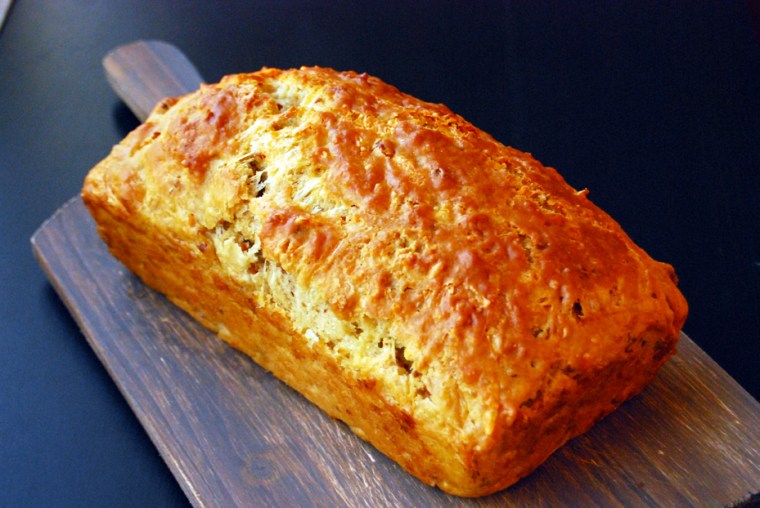
I know a few ways to the heart of my husband and two of those ways is Hefeweizen and Bacon (speck).  We’re miles away from home (almost 4400 to be exact), and sometimes you just need comfort food.  I decided to combine a few of his favorite flavors. We are use to sitting down to classic French dishes from one of my cookbooks but this time I wanted to make something familiar, so I combined three of his favorite flavors, beer, cheese and bacon into a simple recipe. Sure, it’s beer bread and even though it’s the most simplest recipe and doesn’t take all day in the kitchen to prepare, it means more, to the other person and sometimes that’s the best recipe.

acookscanvas_hefeweisenbread2_copyright2012-2013

The flavor is changed based on the type of beer you use, so feel free to have some fun with what you have in your home bar.  I used Weihenstephen Hefeweizen, but if all you’ve got is Miller Genuine Draft, that would work as well. One note on the choice of beer: the darker you go, the more bitter the bread will be. Here is my German-style recipe for Hefeweizen Beer Bread with Speck and Emmentaler

acookscanvas_hefeweisenbread1_copyright2012-2013


Hefeweizen Bread with Speck and Emmentaler 

Ingredients
3 cups all-purpose flour
1 tablespoon baking power
1 teaspoon sea salt
3 tablespoons of granulated sugar (or honey)
1 1/4 cup shredded cheese (I used Swiss Emmentaler but any Swiss cheese will do)
12 oz. hefeweizen beer (note: most hefeweizen beers come in 1/2 litter bottles)
6 slices of bacon, cooked and chopped
2 tablespoons butter, melted

Directions
Preheat oven to 350°F/180°C

Prepare bread pan by greasing with butter. Set aside.

In a large bow, combine flour, baking powder, salt and sugar. Make a well in the center. Add bacon,  3/4 cup of cheese, and beer into the well. Stire mixture with spoon until well combined.  Pour mixture into bread pan.  Add the remaining cheese on top of the mixture and brush with 1 tablespoon of melted butter.  Bake for 30 minutes.

Remove the bread from the oven and brush 1/2 of the remaining melted butter over the top. Bake an additional 25-30 minutes or until browned and the loaf sounds hollow when you tap it.

Remove the bread from the oven to a wire rack and allow to cool for 5 minutes. Remove from pan and allow the bread to cool 10 minutes on a wire rack.

A Pasta Salad

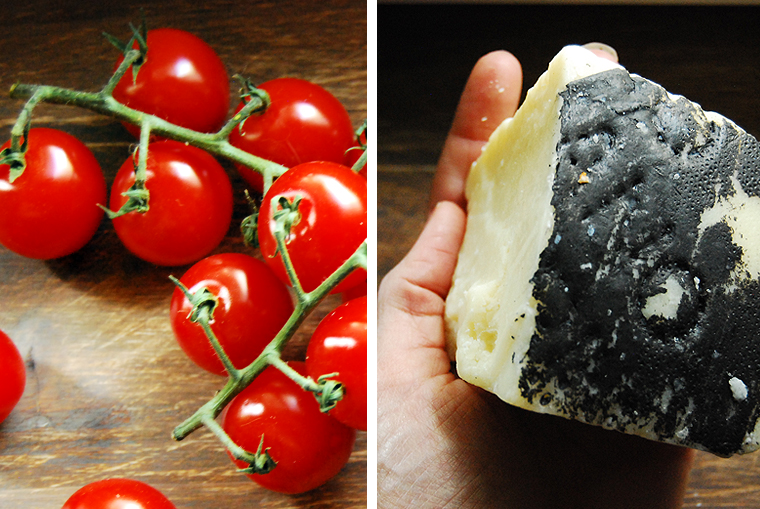
acookscanvas_pasta salad4_copyright2012-2013 copyI went in the kitchen today to make a pasta salad and as I grabbed the vine to twist off a tomato, the scent of the vine hit me. It’s a lovely smell only vine-ripe tomatoes have, and one that takes me back to my childhood. Tomatoes hold a special place in my heart. I’ve always loved the smell of them, that earthy, tangy scent of the tomato, and with it the sharp, prickly, piney smell of the vine. My grandparents grew the juiciest, ripest, most delicious tomatoes I have ever tasted. I remember when I was little and the tomatoes towered over me, it was like a forest of vines I loved to explore. I would sit impatiently on my grandmother’s lap on the porch as she curled my hair with her fingers, then I would take off running into the tomato patch, weaving in and out as the leaves tangled my curly hair.
acookscanvas_pasta salad 5_copyright2012-2013 copyI would often grab the tomatoes by their vines and I loved the earthy green smell they left on my hands. In the kitchen there was always a bowl of fresh picked tomatoes on the table which we enjoyed with every meal. At breakfast I liked to pile slices of tomato on a biscuit, covered with gravy and topped with an egg, at lunchtime, thick salted slices of tomato on a BLT, and at dinner time alongside fried chicken, fried sweet corn, hot-water cornbread, green beans, and turnip greens that had simmered all afternoon. I can remember the smells as if it were only yesterday.
acookscanvas_pasta salad 1_copyright2012-2013

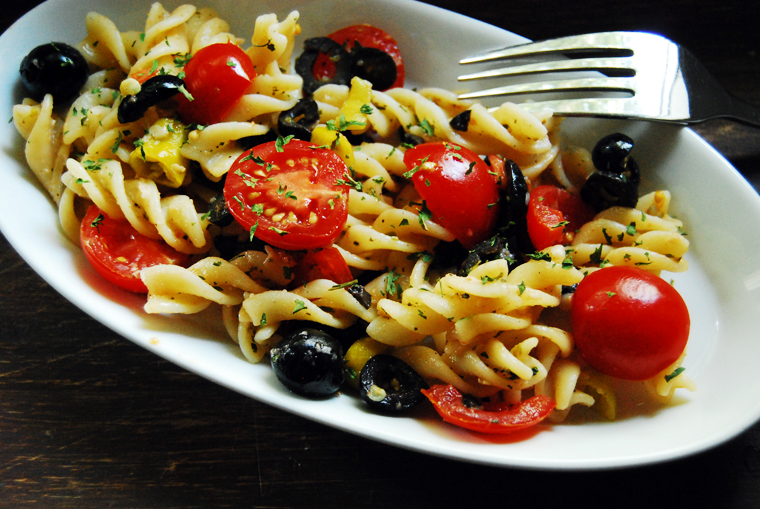
Pasta Salad

Ingredients
Pasta of your choice
A couple handfuls of cherry or grape tomatoes
Small can of black olives
Pepperoncini
1 teaspoon onion powder
1 teaspoon garlic powder
1 tablespoon dried oreagano
sprinkle of dried parsley
drizzle of olive oil and balsamic vinegar
sea salt and freshly ground pepper
freshly grated parmesan reggiano

Directions
Cook the pasta as instructed. While the pasta is cooking, slice the tomatoes and olives in half and put them in a bowl. Slice the pepperoncinis in chunks and add to the bowl. Season with onion powder, garlic powder, drizzle of olive oil and balsamic vinegar, salt, and pepper. When the past is done, rinse and add to the bowl with the rest of the ingredients. Add the dried parsley and freshly grated parmesan reggiano. Toss and immediately serve. This salad is also good as a cold salad.

And so it begins…

My first entry… this is pretty exciting!

Another food blog, I know. With so many food blogs going up every day, how can I compete with some of the best out there? Like most food bloggers, I read blogs for the wonderful recipes and delicious photos. I’ve always been fond of cooking and grew up watching my Mom and Grandmothers, the heart and soul of our family, in the kitchen. As I watched from the kitchen table, they would cook, carrying on conversations while darting back and forth from the fridge to the sink to the stove as laughter filled the room. I watched them make family favorites like hand-made dumplings for chicken soup, delicious southern sausage gravy, or the crispiest fried chicken I’ve ever tasted. I would sit and observe these women whom I’ve always looked up to and knew in my heart that food was love.

Four years ago, my husband’s career took us from the wonderful big city life of Chicago to a scenic wine village in southwestern Germany. After years of working in the design industry, I decided that this was my chance to venture off and learn everything I could about European cooking. Where we live also borders on France and Switzerland which of course means access to a variety of local ingredients. I like to go to the newsstand, and browse the array of european gastronomy magazines until I find something that catches my eye. I swing by the market to pick up ingredients, then hop on my dutch bicycle, it’s basket full of food, and head home to start cooking.

Here is a journal of what we’re craving and I’m happy to share my recipes, photos and stories with you. Some of my recipes are simple, some are advanced, many of them are vegetarian but there are also plenty of meat dishes. There is a little something here for everyone. I hope you enjoy.